
Food Insecurity in Los Angeles County Remains High as Inflation Squeezes Family Budgets
Food Insecurity in Los Angeles County Remains High as Inflation Squeezes Family Budgets
The Food Bank continues to see high demand for food assistance as inflation strains hundreds of thousands of households.
In 2025, the Los Angeles Regional Food Bank saw the need for food assistance rise as the Greater LA wildfires hit several communities, and the government shutdown impacted hundreds of thousands of individuals across LA County. In one of its busiest years, the Food Bank served an average of 1.1 million individuals each month, distributing 160 million pounds of food and products, equivalent to 129 million meals.
Without fires and a significant government shutdown in 2026, the Food Bank was optimistic that the need in Los Angeles County would decrease, but unfortunately, we are seeing the opposite.
As this is being written (September 16, 2026), in the first eight months of 2026, the Food Bank has actually seen a slight increase in the number of pounds distributed compared to 2025, totaling 103 million pounds of food distributed to neighbors. The need for food assistance in Los Angeles County isn’t easing. It’s holding steady at a near-record pace, and for many families, getting worse.
Inflation Continues to Impact Communities
While monetary inflation has declined from its 2022 highs of 9.1%, prices are still rising above the Fed’s target, and in ways that affect people’s basic needs.
Recent inflation numbers:
Inflation in 2026 has remained high throughout the year, putting extra pressure on family budgets. The first quarter saw average rates of 2.7%, before climbing further in the second quarter to an average of 3.8%. In July and August of 2026, the rate held at 3.4%.
This sustained inflation is part of a longer trend: over the past decade, what cost $50 in 2016 now costs $69.56, a 39.1% increase. On top of that, fuel prices have risen compared to last year, adding even more strain to household budgets already stretched thin.
Fuel:
Over the last five years, Los Angeles County has seen rollercoaster gas prices. According to the Los Angeles Almanac, in 2021, the average annual price in Los Angeles was $4.18 per gallon, and 2022 shattered records, with a monthly high of $6.16 in June and weekly averages briefly reaching $6.23.
While gas prices eased for a short period, with the County’s 2025 annual average landing at $4.65, the relief was short-lived. After the U.S. launched military attacks on Iran at the end of February 2026, gasoline prices rose again, reaching the region’s second-highest monthly average on record, $5.92, in May 2026.
For those neighbors already stretched thin by everyday costs, this kind of volatility at the pump adds yet another layer of financial pressure on top of rising food and housing costs.
Groceries:
Grocery prices have been climbing all year, according to the U.S. Bureau of Labor Statistics’ regional Consumer Price Index. The price of food increased 3.2% in January 2026 compared to the previous year, then rose to 3.3% by April.
Throughout the summer, when children are at home, and grocery budgets tend to increase, food prices were still up 3.2% in July and 2.8% in August compared to the year before, with grocery costs climbing in each of those months again. For families whose grocery budgets are already stretched thin, rising household food demand and inflation make it harder to get through the month.
Affordability
According to a recent article by the LA Times, the Los Angeles-Long Beach area ranked as the ninth most expensive place to live in the nation in the second quarter of 2026. With groceries, gas prices, rent, and utilities on the rise, for a family working with a fixed budget, that persistent upward pressure means every trip to the grocery store buys a little less than it did the month before.
View this post on Instagram
The cost of living has long been a factor throughout Los Angeles County, and the aforementioned inflation only exacerbates things. Families and individuals whose budgets were already tight are facing even more financial pressure.
Changing Benefits
As 2026 unfolds, significant federal and state policy changes to the CalFresh Program, or Supplemental Nutrition Assistance Program (SNAP), are creating new challenges for many of our neighbors across Los Angeles County who depend on these benefits in order to put food on their tables.
The Program provides critical, monthly food assistance to eligible individuals and families, helping them put nutritious meals on the table and maintain their health and well-being. Using an EBT (Electronic Benefit Transfer) card, recipients can purchase fruits, vegetables, grains, and proteins at local grocery stores and farmers’ markets, thereby boosting the local economy.
A series of federal policy updates passed in 2025 is now taking effect in phases throughout 2026, impacting eligibility, work requirements, and overall access to benefits.
Beginning April 1, 2026, federal law changed CalFresh eligibility for certain noncitizens, including refugees, asylees, and several other humanitarian immigration categories. For people already receiving CalFresh, the change generally takes effect at their next recertification after April 1.
Beginning June 1, 2026, certain adults ages 18–64 who do not have a dependent child under age 14 and are otherwise subject to federal work requirements must participate in qualifying work or community-engagement activities to continue receiving CalFresh for more than three months within a three-year period. Qualifying activities can include paid work, volunteer or community service, education, job training, or workfare. Generally, individuals must participate for up to 20 hours per week, or 80 hours averaged per month. People who are working may also satisfy the requirement by earning at least $217.50 per week before taxes.
The changes also removed categorical exemptions that previously applied to veterans, people experiencing homelessness, and former foster youth aged 24 and younger who had been in foster care on their 18th birthday. However, people in these groups may still qualify for another exemption based on their individual circumstances.
Starting October 2026, another major change will affect how CalFresh is funded and administered. Under the new federal policy, the federal government’s share of CalFresh administrative costs will decrease from 50% to 25%, shifting a significantly larger portion of program operating costs to states and counties.
The Food Bank is Here to Help
As inflation continues to outpace income for many households, the Food Bank’s network of hundreds of partner agencies and direct and indirect food distribution remains a critical lifeline for more than 1 million people who seek food assistance each month.
Meeting this level of need requires ongoing community support, through food donations, volunteer hours, and financial contributions that allow the Food Bank to carry out its mission. Consider making a donation or volunteering at the Food Bank.
More Stories from the LA Regional Food Bank

Why Does Food Insecurity Persist in Los Angeles County?
Why do so many individuals struggle to put food on the table? Learn what food insecurity is, what drives it, and how the Food Bank can help.
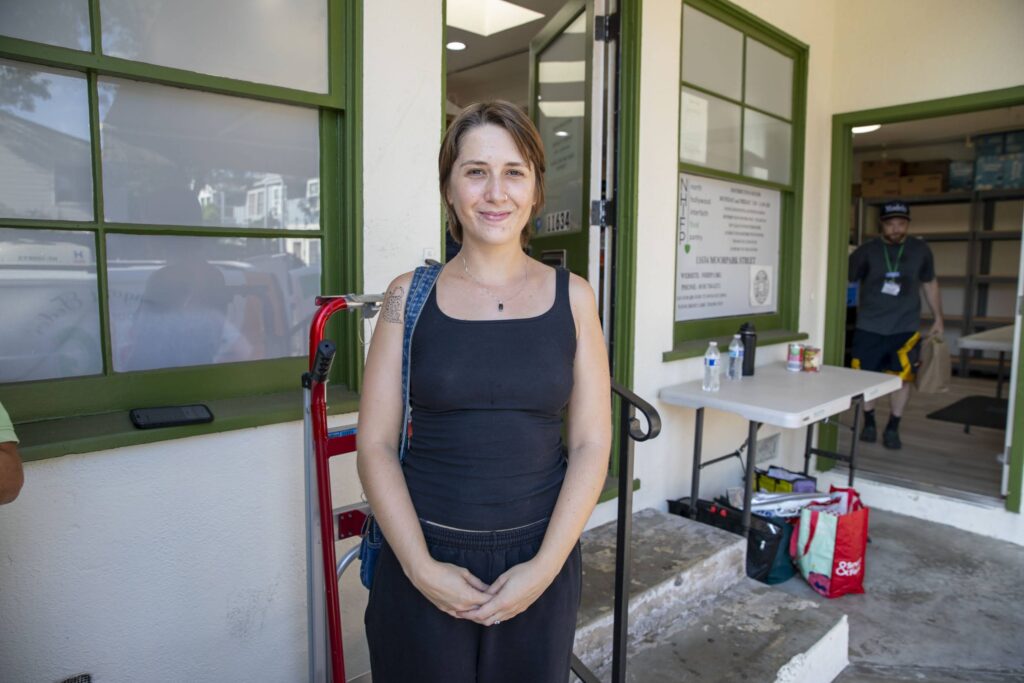
Finding Support and Dignity at North Hollywood Interfaith Food Pantry
On a Friday morning, Anna arrived at North Hollywood Interfaith Food Pantry for the first time. Learn about her experience at the Food Bank partner agency.

One Birthday, 4,000 Meals: How Keturah Reed Turned Her 42nd Into a Fundraiser for the Food Bank
Keturah Reed turned her 42nd birthday into 4,000 meals for neighbors in need. Learn how to start your own Team WeFeedLA fundraiser.
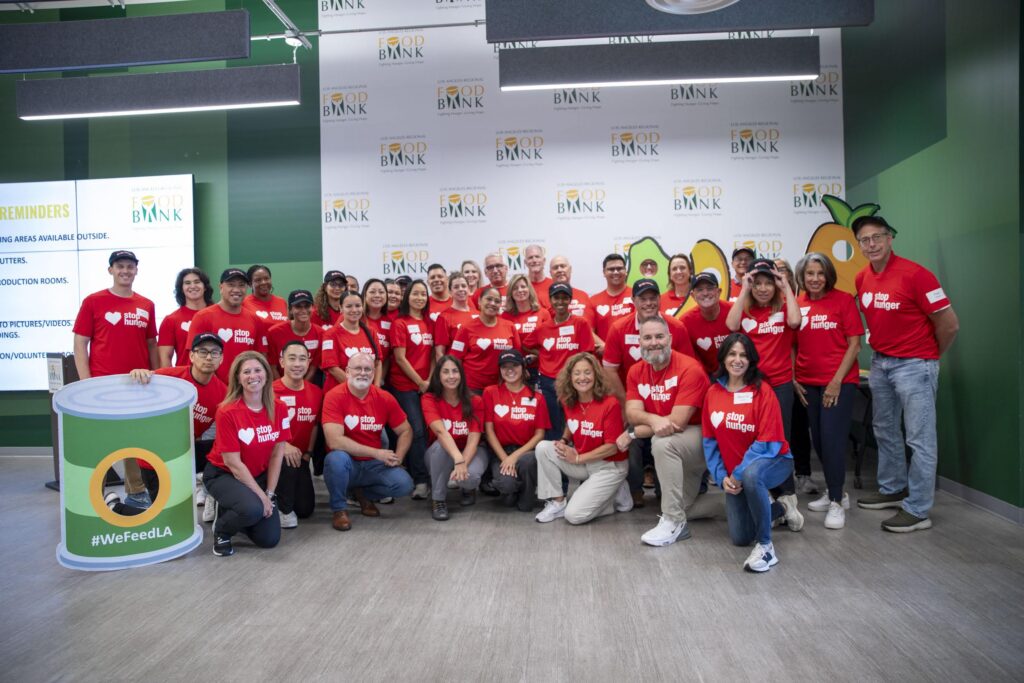
Turning Support Into Action: Inside Sodexo Stop Hunger Foundation’s Community Rebuilding Project at the Food Bank
The LA Regional Food Bank and Sodexo Stop Hunger Foundation team up to pack food for wildfire recovery during a day of service and discussion.