
Food Bank 101: How the LA Regional Food Bank Feeds Los Angeles County
Food Bank 101: How the LA Regional Food Bank Feeds Los Angeles County
Get a behind-the-scenes look at how the Food Bank sources, stores, and distributes food to neighbors across LA County.
More than 50 years ago, a man named Tony Collier reached out to grocery stores to find perfectly good surplus food he could pick up and give away for free to the community. Little did he know that his efforts would kick off what is now the Los Angeles Regional Food Bank.
In 2025, an average of 1 million individuals sought food assistance from the Food Bank each month. Throughout the year, 160 million pounds of food were distributed across LA County, equivalent to 129 million meals. So, how does the Food Bank make it all happen? Continue reading to learn more about how the Food Bank operates day-to-day.
How Does the Food Bank Get Food?
A lot has changed since Tony Collier began sourcing food back in 1973. Today, the Food Bank partners with growers, wholesalers, manufacturers, distributors, and retailers to ensure a steady supply of fresh, nutritious food for neighbors seeking food assistance. While much of the food is donated, the Food Bank does purchase at least 10% of the incoming food.
Extra Helpings is a program that connects local grocery stores, restaurants, and bakeries directly with nearby partner agencies to rescue food that would otherwise end up in landfills. Through this program, partner agencies can pick up fresh produce and prepared foods directly from the local donor, allowing food to move much more quickly from the shelf to a neighbors table.
Where is the Food Stored?
Once the Food Bank team has secured food delivery or pick up, the food arrives at one of the Food Bank’s three warehouse and distribution facilities across Los Angeles County. Once it arrives, it doesn’t just get shelved; it goes through a receiving and inspection process where staff and volunteers sort, inspect, and log every donation into the Food Bank’s inventory system.
From there, food is separated into the right storage environment based on what it needs to stay safe and nutritious:
- Dry storage for shelf-stable items like canned goods, pasta, and rice
- Refrigerated storage for perishables like dairy and produce
- Freezer storage for frozen meat, produce, and prepared foods
Any product that doesn’t meet food safety standards is discarded, so only safe, quality food moves forward in the process.
From the Food Bank Into the Community
Food rarely sits in the warehouse waiting to be picked up whenever it’s convenient, it moves out on a schedule, in one of two main ways:
- Partner Agency pick up: Hundreds of food pantries, shelters, religious organizations, and community organizations schedule regular appointments to pick up food directly from a Food Bank warehouse, either from the City of Industry Distribution Center, the South LA Warehouse, or the new Long Beach Hub.
- The Food Bank Delivers: For perishable items in particular, refrigerated trucks transport fresh produce and other perishables to a distribution hub or directly to an agency, since many partner agencies have limited on-site refrigeration.
Once food leaves a Food Bank facility, it reaches neighbors through the following main channels:
Partner Agencies
The majority of food distributed by the Food Bank flows through a network of more than 600 partner agencies. These agencies know their neighborhoods best, which makes them the most direct link between the Food Bank and neighbors who need help. To find the closest partner agency, visit our Pantry Locator for more information.
Direct Distribution
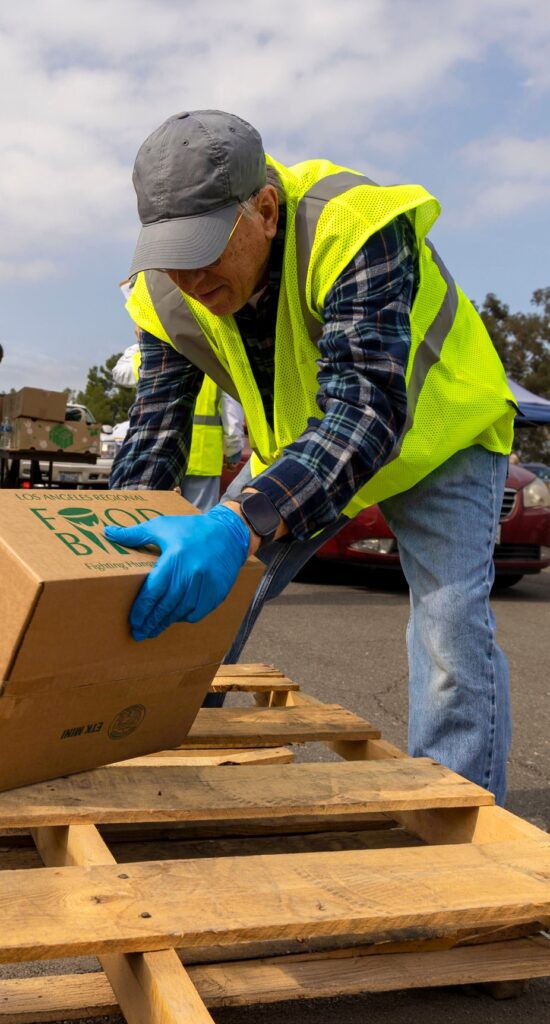
The Food Bank also distributes food directly through its own programs. The Mobile Food Pantry, for example, brings food straight into underserved communities, including through drive-through distributions that serve thousands of households.
Food Bank Programs
Beyond general distribution, the Food Bank runs targeted programs designed for specific needs.
- The Senior Nutrition Program delivers groceries directly to the homes of food-insecure older adults. Additionally, the Commodity Supplemental Food Program (CSFP) supplies food at senior centers and senior housing sites across the County.
- The Children’s Nutrition Program tackles child hunger year-round through initiatives like the BackPack Program, which sends kids home with nutritious food kits for the weekend when school meals aren’t available. Additionally, the Breakfast and After-School Meals help provide meals that may otherwise be a financial burden to low-income families. During the summer, the Summer Meals Program steps in to fill the gap left when school cafeterias close, serving breakfast and lunch at community sites like libraries, Boys and Girls Clubs, and summer schools so kids don’t go without.
The work of the Food Bank wouldn’t be possible without the generosity of the community. If you’d like to get involved in the fight against hunger, consider donating to the Food Bank or volunteering at one of our two warehouses or at a partner agency. Together, We Feed LA.
More Stories from the LA Regional Food Bank
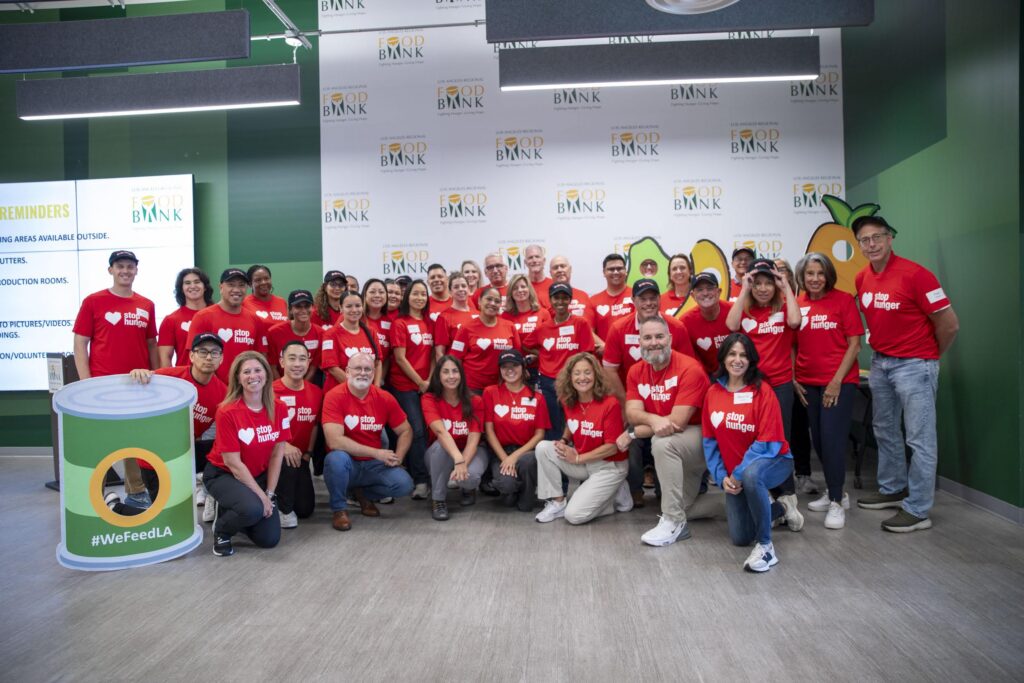
Turning Support Into Action: Inside Sodexo Stop Hunger Foundation’s Community Rebuilding Project at the Food Bank
The LA Regional Food Bank and Sodexo Stop Hunger Foundation team up to pack food for wildfire recovery during a day of service and discussion.
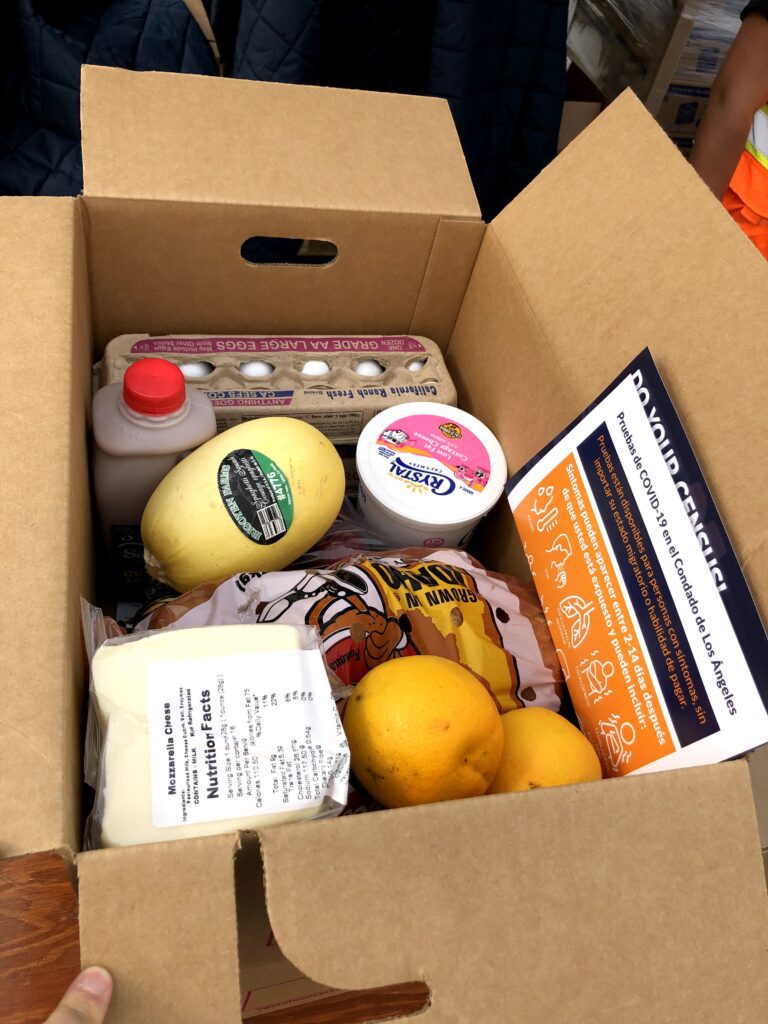
Extra Helpings: How the Food Bank is Helping Rescue Millions of Pounds of Food
Find out how the Food Bank’s Extra Helpings Program rescues nearly 29 million pounds of food a year to feed families across LA County.
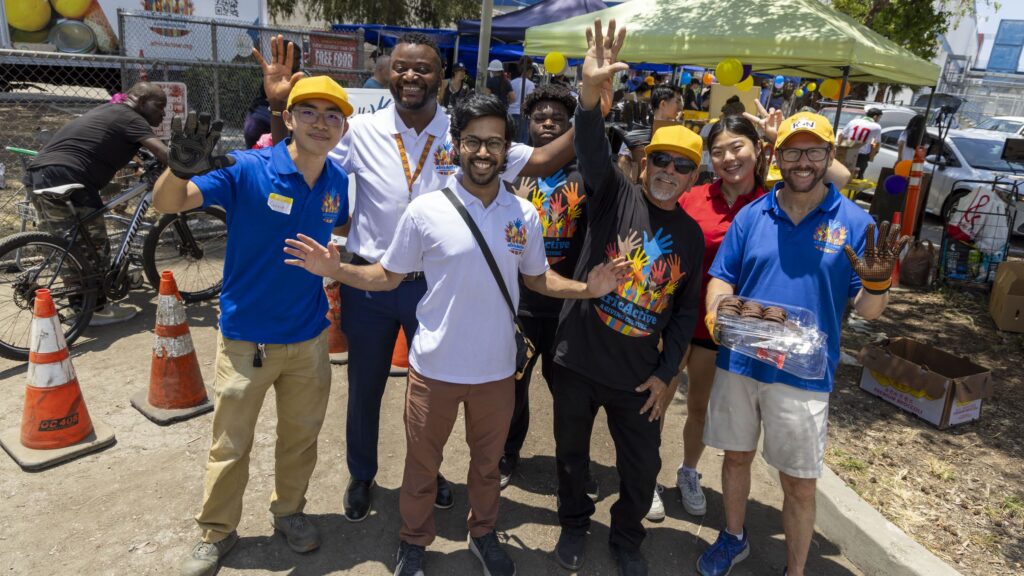
africActive: Helping the Food Bank Fight Hunger in Los Angeles County
Learn how Food Bank partner agency africActive is helping fight hunger, support working families and seniors, and build a stronger community.
Food Insecurity in Los Angeles County Remains High as Inflation Squeezes Family Budgets
The Food Bank continues to see high demand for food assistance as inflation strains hundreds of thousands of households.