
How Food Assistance Helps a Single Mother
How Food Assistance Helps a Single Mother
Agency Partner East LA Service Center Supports Families Like Jacqueline and Her Baby
Generous support from our partners, volunteers and financial donors has allowed the Los Angeles Regional Food Bank to respond to one of the most dramatic increases in food insecurity that we’ve seen. The pandemic has forced us to continuously shift our lives due to an engrossing pandemic and an ongoing recovery effort. While the pandemic has impacted all walks of life, experts report that mothers do most of the needed extra child care and domestic work.
Roughly one million mothers have left the workforce, with Black mothers, Hispanic mothers and single mothers being hit the hardest. We were fortunate to recently meet with one of those single mothers and her young child at a distribution hosted by Los Angeles Regional Food Bank Partner Workforce Development Aging and Community Services (WDACS). Below is their story.
“I come every month to get diapers and sometimes food,” Jacqueline Reyes said while holding her seven-month-old daughter. “The diaper donations have been helping me a lot because literally every 30 minutes, I’m changing her diaper. I’ve been coming every month ever since she was born. I’m a single mother living on my own and the diaper and food assistance has helped cut down costs for me.”
In 2020 alone, the Food Bank distributed 174.6 million pounds of food and product through partner agencies and food assistance programs. The Food Bank also distributes non-food items like diapers. In 2020, 3 million diapers were distributed to 52,000 households through our agency network. According to the National Diaper Bank Network, 1 in 3 US families experience diaper needs.
“I’m extremely thankful and grateful for the support and help. This helps a lot of families, especially low-income families like myself.”
According to Pew Research Center, Hispanics have been more susceptible to economic hardship during the pandemic than some other groups. In the same token, Hispanic individuals have been at a higher risk of hospitalization or death from COVID-19 than some other racial and ethnic groups in the US, according to the US Centers for Disease Control and Prevention. The CDC reports these statistics because race and ethnicity can be noteworthy for risk factors such as lack of access to health care and exposure to the virus from jobs that require contact with others.
“At the beginning of the pandemic, I was unemployed for a while but as things slowly reopened, I’ve gradually gotten more hours,” Reyes reveals. “It hurt me financially but it’s been better now.”
Many like Reyes are in the process of getting back on their feet as the economy is still recovering. “The hardest-hit industries in the County include hospitality and tourism; the motion picture and television industry; non-essential retail, such as furniture and clothing stores; personal care services; and arts, entertainment and recreation that includes performing arts, spectator sports, museums, and amusement parks, reports the Los Angeles County Economic Development Corporation. Experts believe that the economic impact will have lasting effects here in LA County.
More Stories from the LA Regional Food Bank
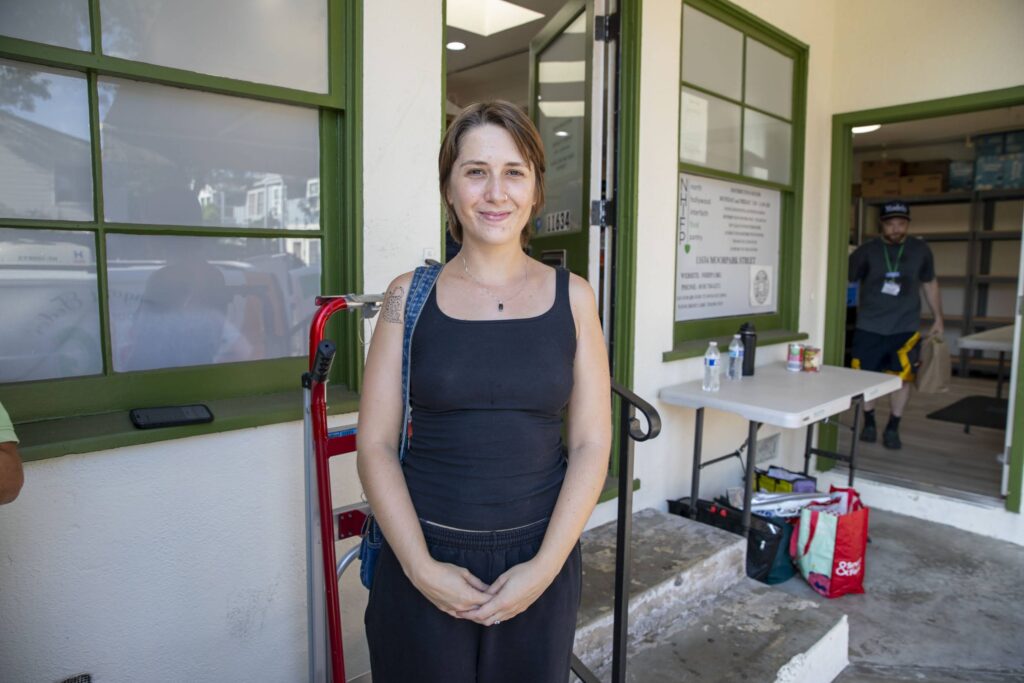
Finding Support and Dignity at North Hollywood Interfaith Food Pantry
On a Friday morning, Anna arrived at North Hollywood Interfaith Food Pantry for the first time. Learn about her experience at the Food Bank partner agency.

One Birthday, 4,000 Meals: How Keturah Reed Turned Her 42nd Into a Fundraiser for the Food Bank
Keturah Reed turned her 42nd birthday into 4,000 meals for neighbors in need. Learn how to start your own Team WeFeedLA fundraiser.
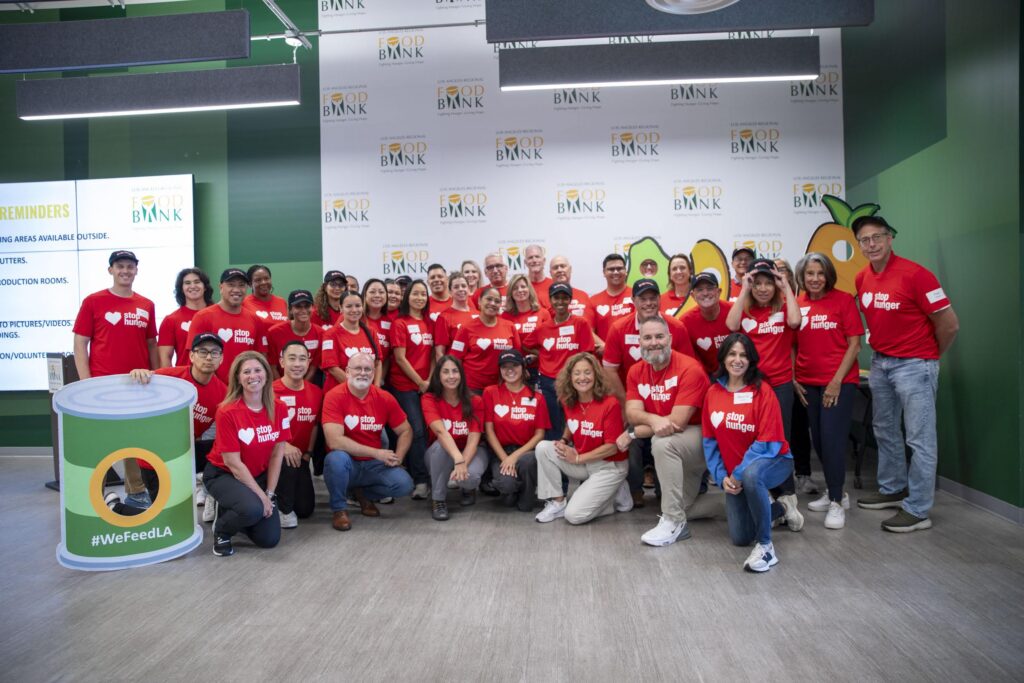
Turning Support Into Action: Inside Sodexo Stop Hunger Foundation’s Community Rebuilding Project at the Food Bank
The LA Regional Food Bank and Sodexo Stop Hunger Foundation team up to pack food for wildfire recovery during a day of service and discussion.
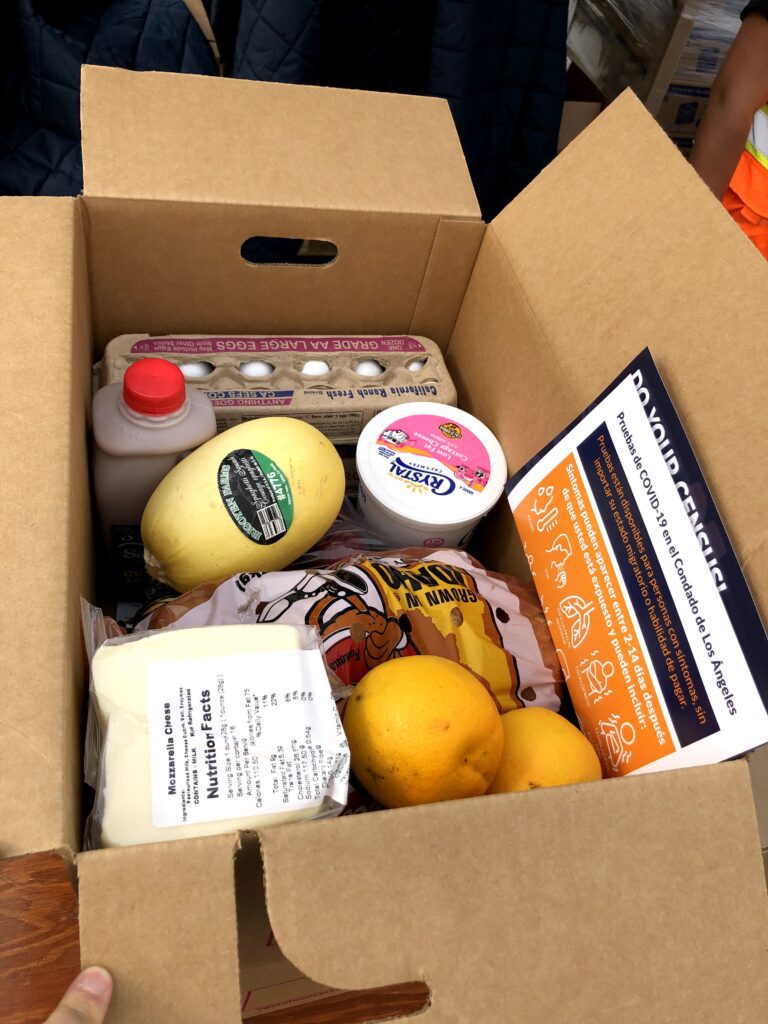
Extra Helpings: How the Food Bank is Helping Rescue Millions of Pounds of Food
Find out how the Food Bank’s Extra Helpings Program rescues nearly 29 million pounds of food a year to feed families across LA County.