
What it’s Like to Attend a Food Bank Walk-Up Distribution
What it’s Like to Attend a Food Bank Walk-Up Distribution
The Food Bank hosts walk-up food distributions to help families struggling with inflation
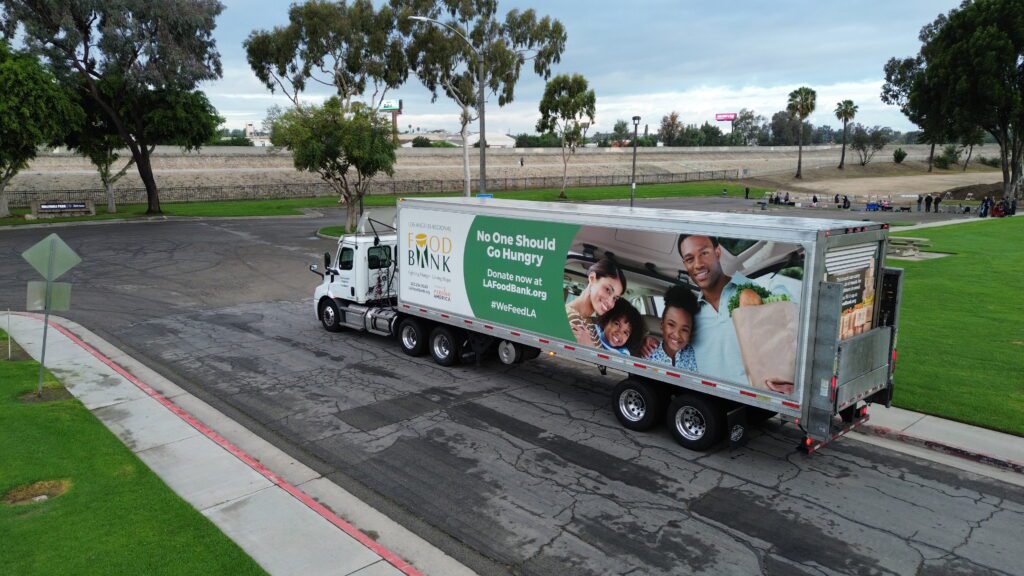
Before the pandemic, the Los Angeles Regional Food Bank ran the Mobile Food Pantry (MFP), a truckload of food going to underserved communities to distribute nutritious food in a walk-up or grocery-style way where recipients pick and choose what they need. The MFP visits food deserts or areas where there are fewer Food Bank partner agencies and also visits college campuses where food insecurity is a growing concern.
However, when the pandemic hit, the Food Bank had to look for a way to distribute food to a large number of people while following local, state, and federal regulations. Hence the beginning of the drive-through distributions that allowed the Food Bank to serve nearly a million individuals every month throughout 2020.
Although drive-through distributions are quick and effective and there is no need to get out of one’s car (which was even more important in the middle of the pandemic), there are individuals who don’t count on vehicles or transportation. Even during the pandemic, the Food Bank offered walk-up options at many of the drive-thru distributions, and most of the partner agencies continued to offer walk-up options. However, now that the pandemic is winding down, the Food Bank is now offering more walk-up distributions.
With lifestyles returning to a new normal, and state and federal regulations allowing outdoor gatherings, the Food Bank resumed walk-up distributions, and those have been welcomed back with open arms by individuals in need.
Walk-Up Distributions Help Families Struggling with Inflation
In partnership with the Los Angeles Rams, the Food Bank recently held walk-up distributions in South Los Angeles and Cerritos College. At each distribution, over 500 families waited in line in order to receive the food that will relieve them of the high cost of basic grocery items.
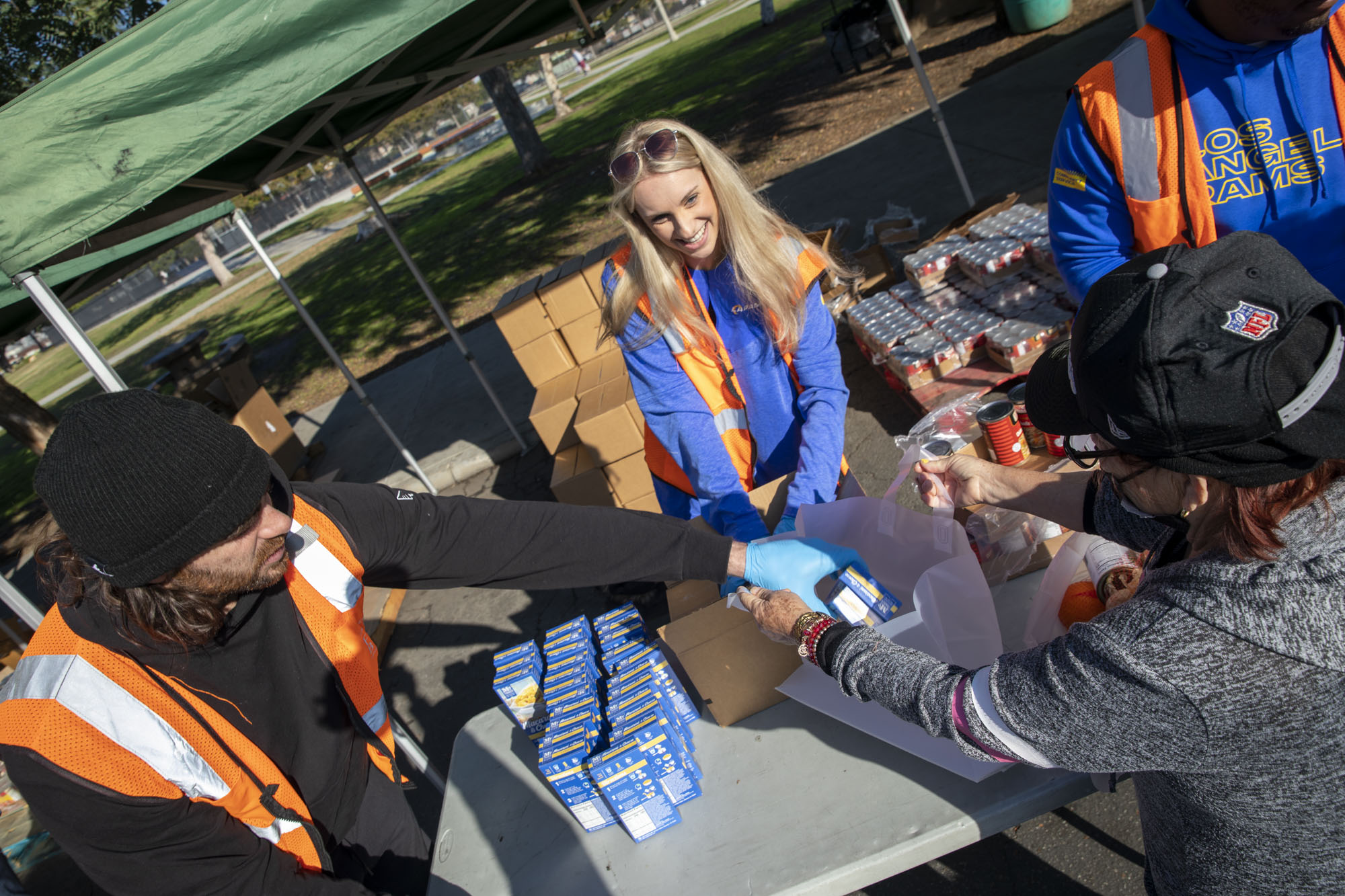
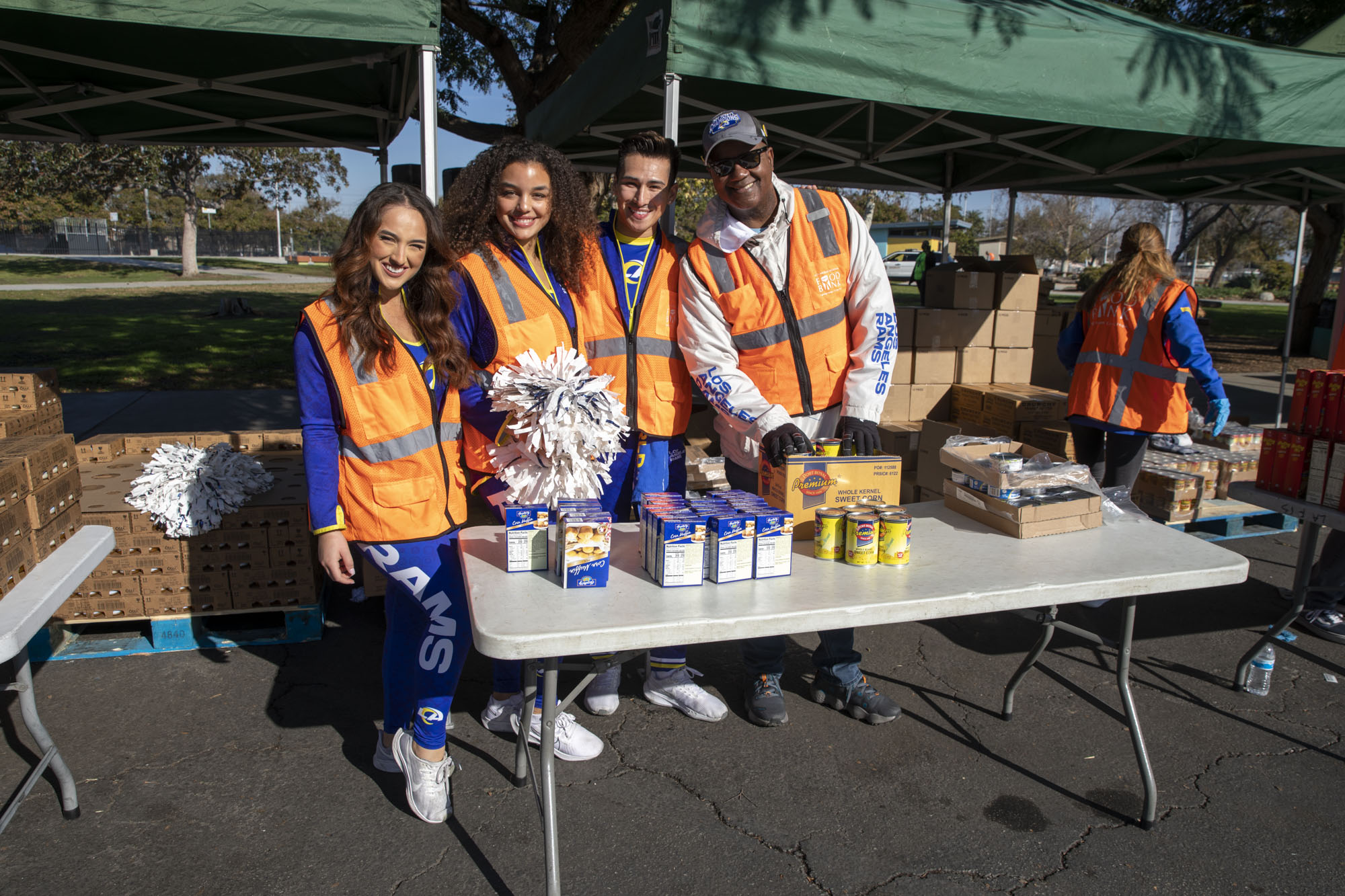
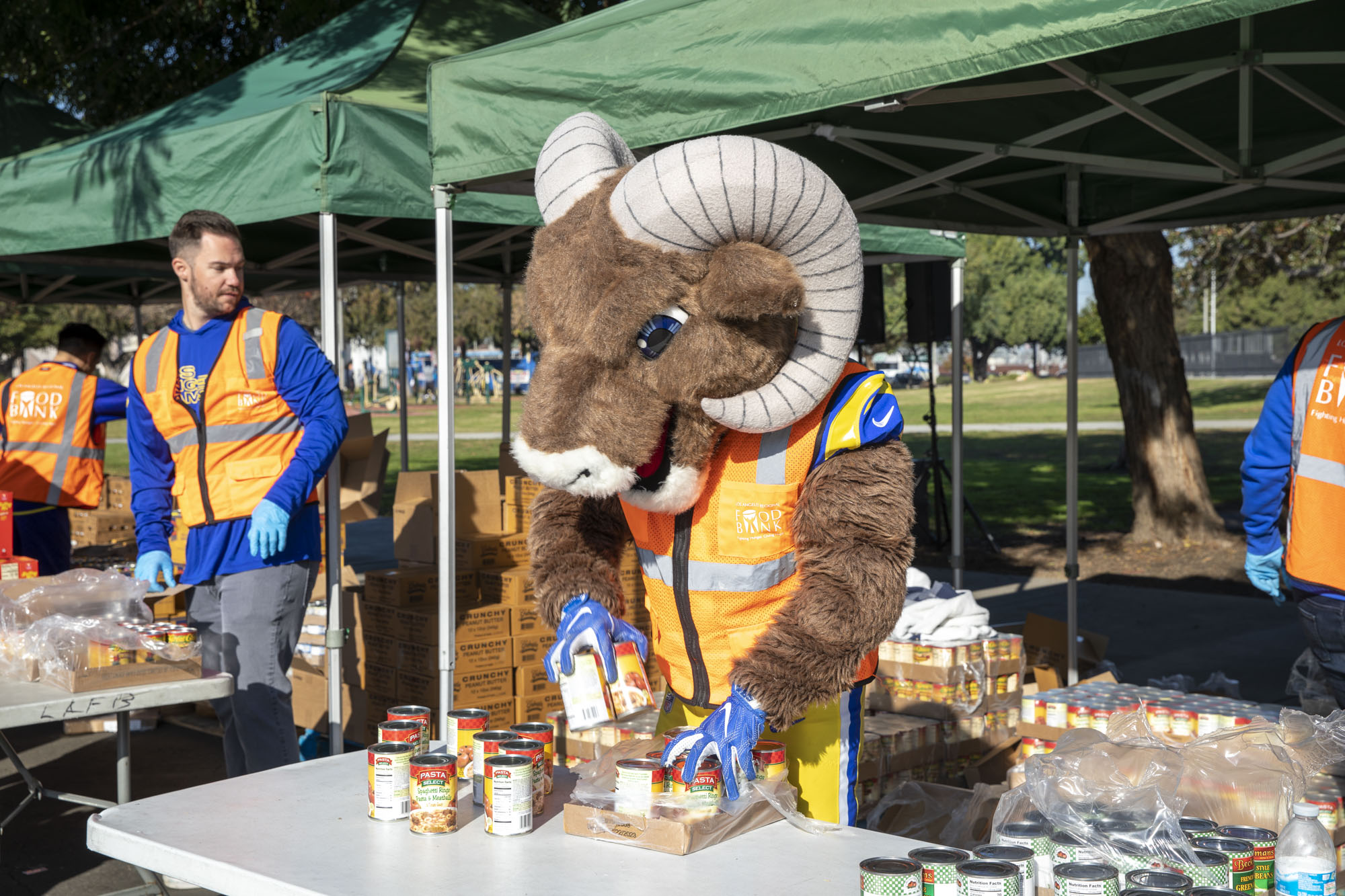
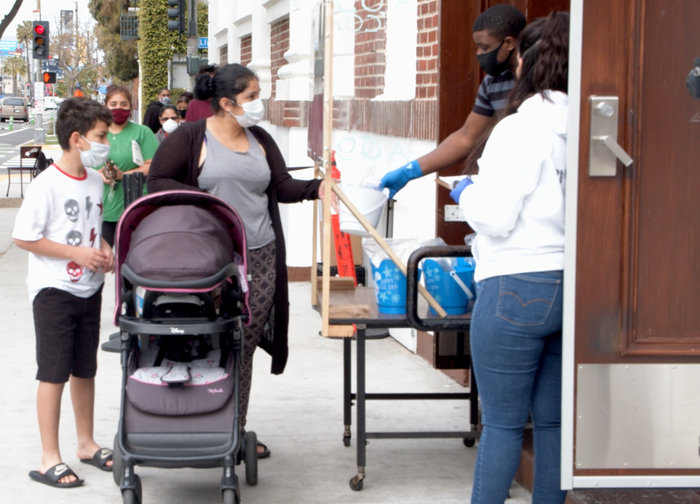
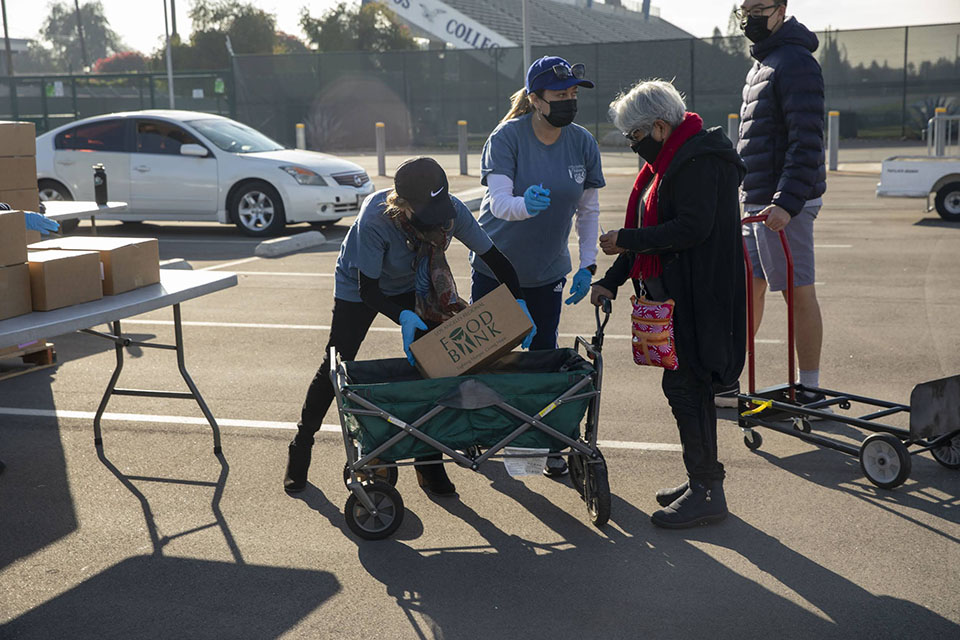
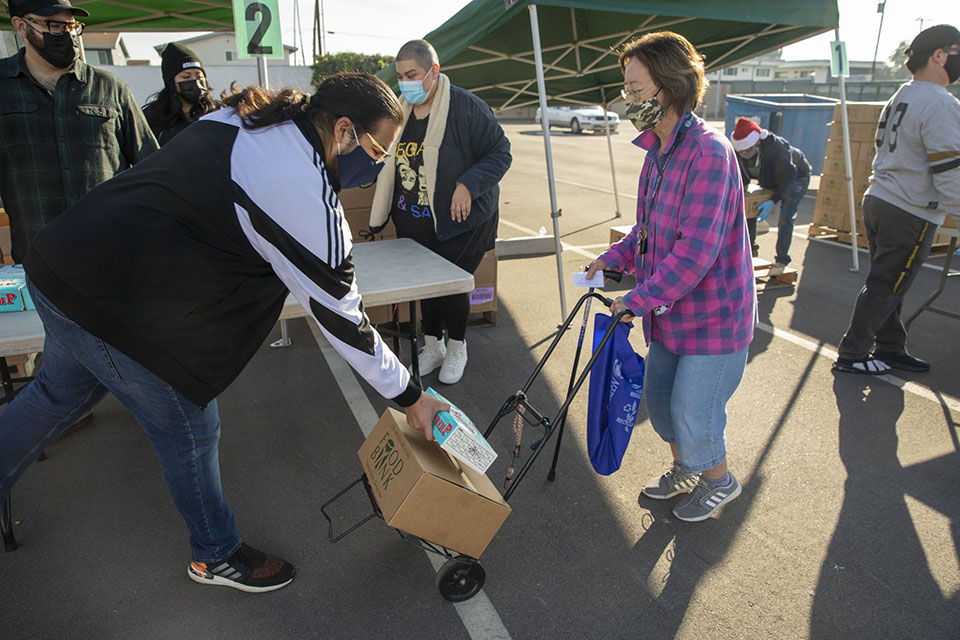
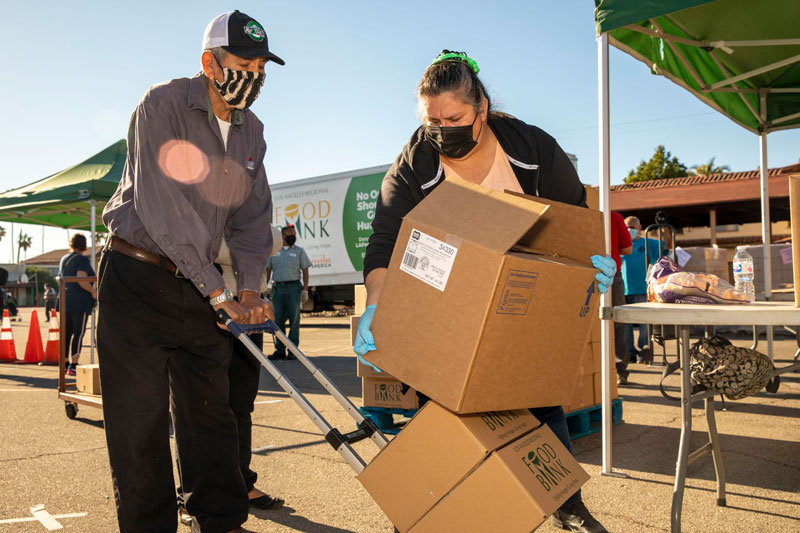
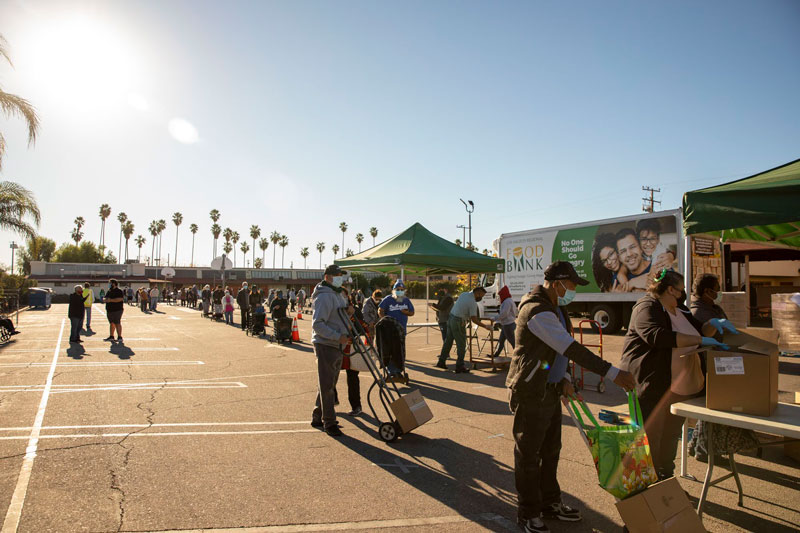
Families struggling with inflation of everyday goods and services including food, gas, rent, and utilities have been forced to cut back on essentials, and have also changed their shopping behaviors when going to the grocery store.
There are many like Aniceta Hernandez, a food recipient at Central City Neighborhood Partners, who went from eating fish and meat twice a week, to now cutting back to two nights a week.
What’s It Like To Go Through a Walk-Up Distribution
An hour before the distribution was scheduled to begin, at least a dozen families are lined up and ready to go through the line. Just like drive-through distributions, individuals receive the same items – a box of canned goods, rice, beans, fresh produce, dairy, and protein products.
Food recipients may choose to drive to the distribution site if needed. Regardless, it is highly recommended to attend the distribution with a storage wagon or cart in order to comfortably travel with the food that is distributed. Individuals may also choose to not receive a certain product if they will not make use of it.
Like in drive-through distributions, the Food Bank only asks for the number of family members, zip code, and how the person found out about the event. No eligibility is required, and no financial documentation is needed.
If you are in need of food assistance, please visit our Pantry Locator to find a partner agency near you. But if you’re in a position do donate, please consider donating to the Food Bank. 96% of donations go directly to supporting programs like the Mobile Food Pantry.
More Stories from the LA Regional Food Bank
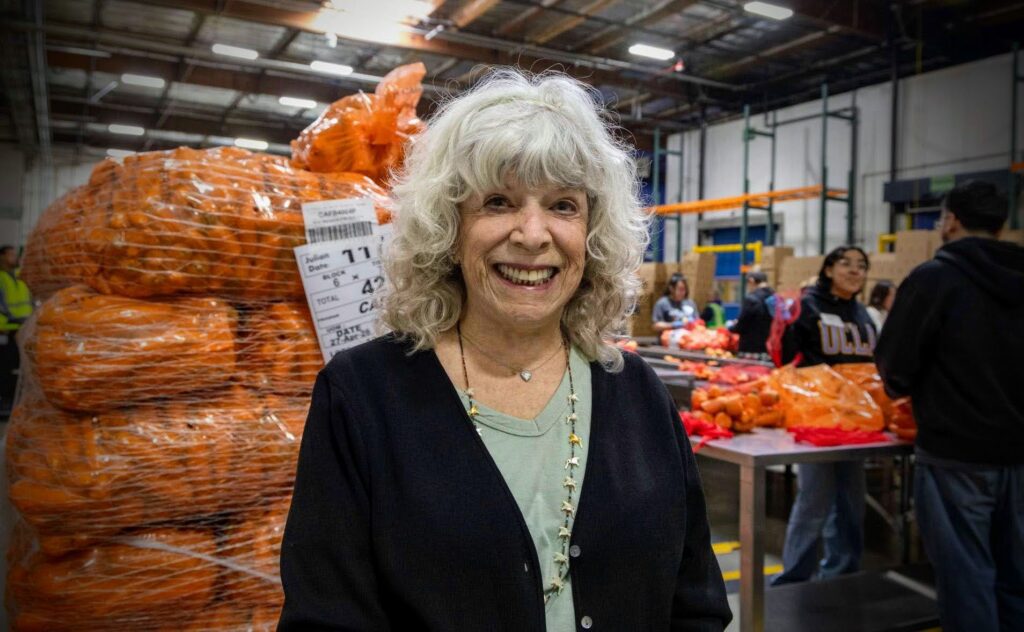
A Legacy of Giving: Roberta Stone’s Commitment to Fighting Hunger in Los Angeles County
Through volunteering, gifts from her IRA, and including the Food Bank as a beneficiary, Roberta is helping neighbors have access to nutritious food.
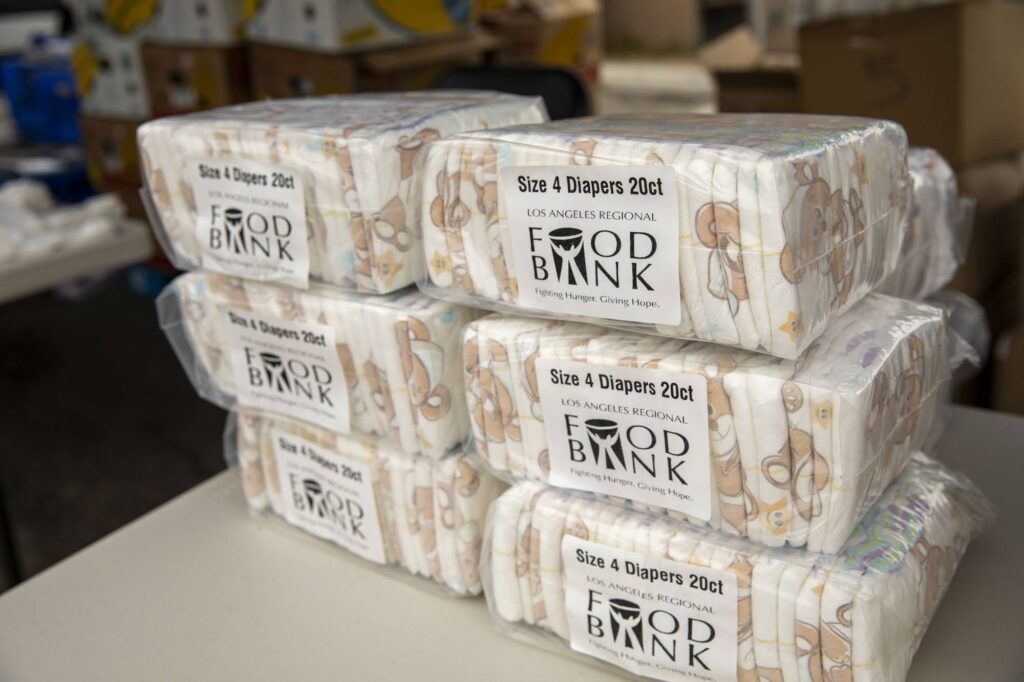
More Than a Necessity: Why Diaper Assistance Matters to Families in Los Angeles County
For many families and households, diapers are a basic necessity. Yet for parents and caregivers, keeping up with diaper costs can become overwhelming.
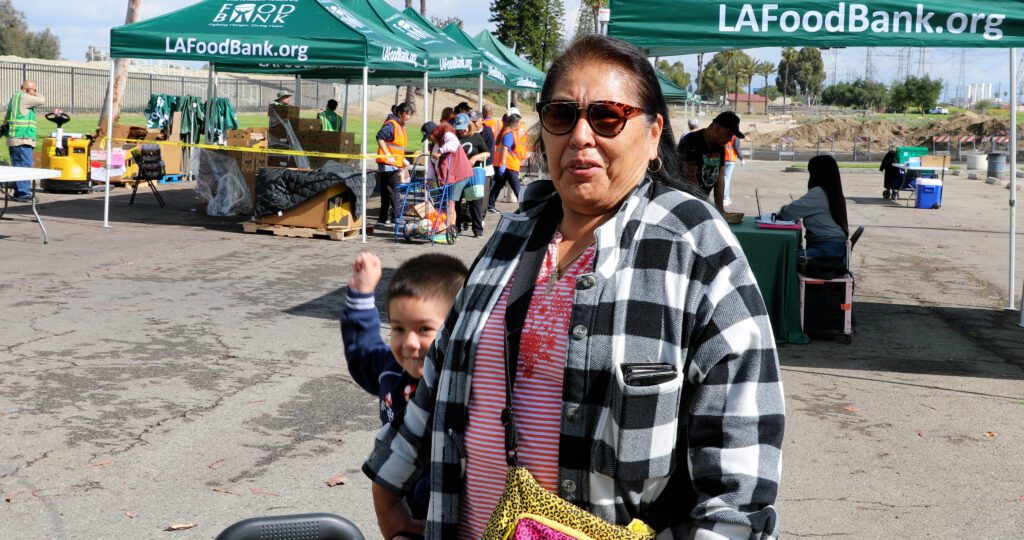
The Food Bank’s Mobile Food Pantries Help Seniors, like Maria Estela, Stretch Every Dollar
Learn how the Food Bank’s Mobile Food Pantries help seniors like Maria Estela access nutritious food, stretch fixed incomes, and maintain independence.
The Food Bank’s Mobile Food Pantry – Meeting Neighbors Where They Are
Learn more about the Food Bank’s Mobile Food Pantry, and how its distributions help provide food and nutrition security where it’s needed most.