
USC Research Shows Food Insecurity Hits Various Income Brackets
USC Research Shows Food Insecurity Hits Various Income Brackets
Food Insecurity in LA County Amid the Coronavirus
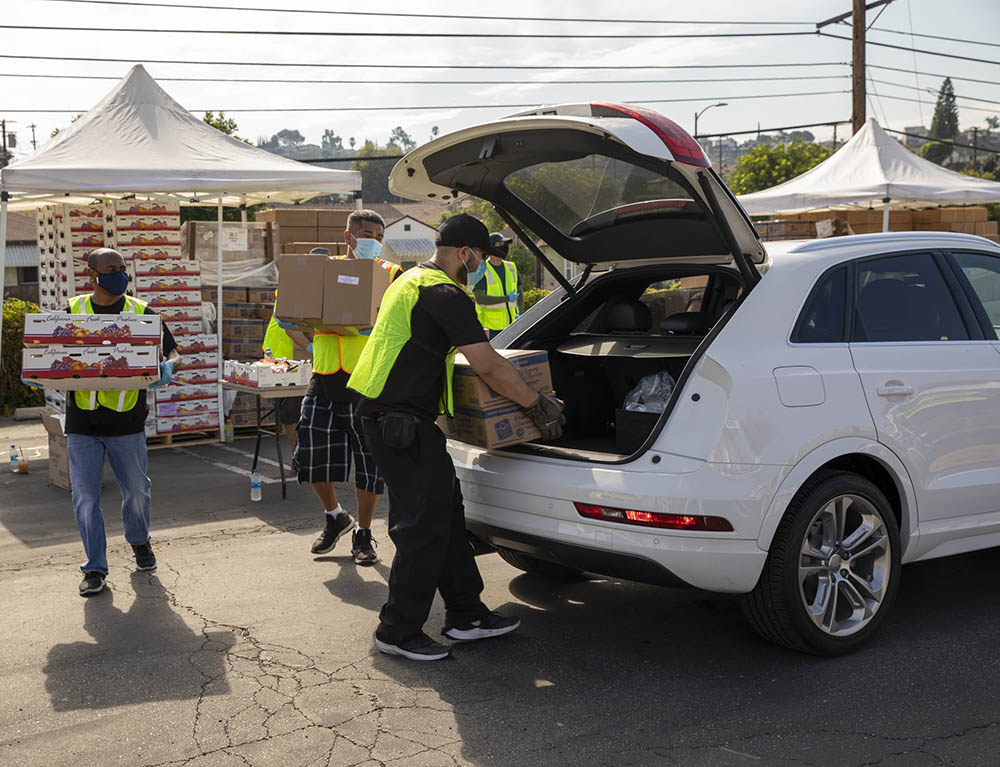
As the need for food assistance continues to climb, new research from the University of Southern California warns that food insecurity affects more people than many think it does.
Before the pandemic, it was estimated that only about 10% of the food from the Los Angeles Regional Food Bank went to those experiencing homelessness, and the majority of the food went to lower-income individuals and families who were facing a high cost of living in LA County. Even before COVID-19, many families faced tough decisions to skip meals to pay for rent, medication or other expenses. In addition to skipping meals, many resorted to cheap, unhealthy food to make ends meet.
The pandemic, and the related economic fallout, has made the situation far worse.
LA Regional Food Bank – Pre-Pandemic:
- Processed over 1 million pounds of food per week.
- Reached roughly 300,000 people each month.
LA Regional Food Bank – Post-Pandemic:
- Currently (as of 9/24) processing 4 million pounds of food per week.
- Reaching roughly 900,000 people each month.
USC’s Survey Sheds More Light
According to new research spearheaded by USC Dornsife’s Public Exchange published on September 23, 2020, food insecurity expands beyond low-income individuals in Los Angeles County. According to the study, food insecurity in LA County peaked in April, and it remains much higher now than before the Coronavirus outbreak.
According to The USC Food Insecurity study:
- More than 1 in 4 LA County households couldn’t access nutritious food at least once between April and July of 2020.
- In 2018, 27% of low-income households struggled with food insecurity, but between April and July 2020, that number spiked to 42%.
- Roughly 20% of the households that faced food security were not low-income and reported a typical income of $60,000 per year and above.
- Profile for Food Insecurity in LA County During the Pandemic:
- Female = 57%
- Latinx = 55%
- Low Income = 82%
- Middle-aged (between 18-40) 59%
- Children in the home = 50%
- The pandemic also likely lowered the quality of food consumed by people in LA County, and as we know, unhealthy food puts people at greater risk for food-related diseases like heart disease, obesity and diabetes.
Kayla de la Haye, the lead researcher and assistant professor of preventive medicine at Keck School of Medicine of USC, said, “The spread of COVID-19 has worsened the already high levels of food insecurity among low-income households and marginalized groups and has even impacted demographic groups that are historically less likely to ever experience it.”
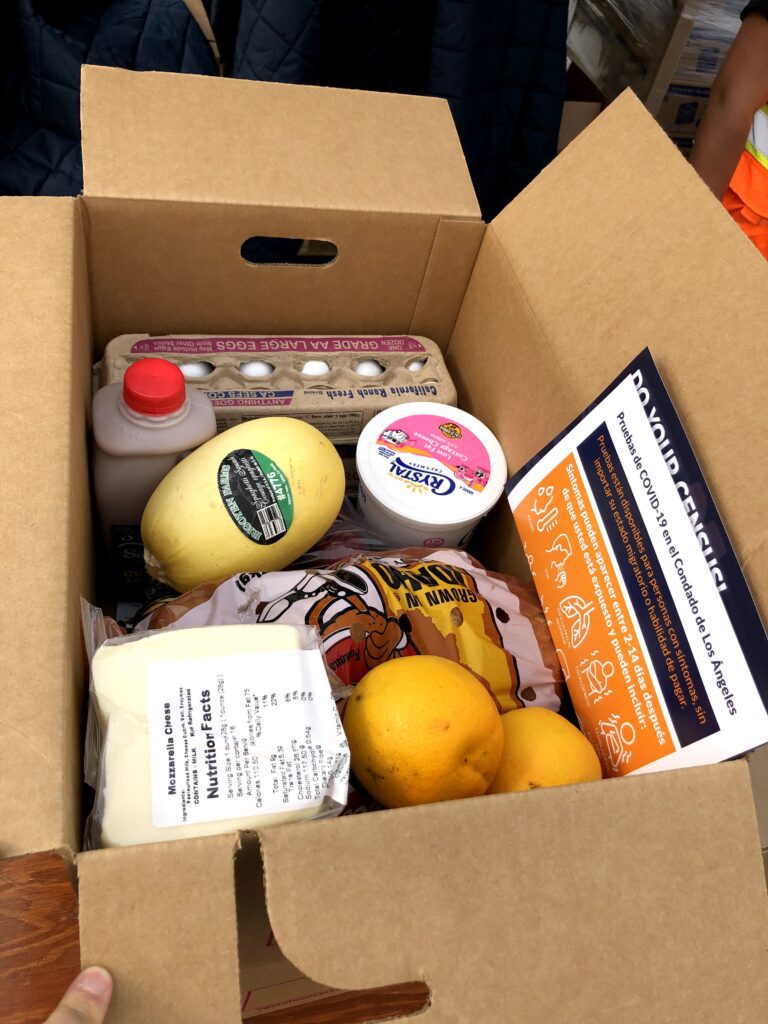
This CNN story from April 2020 shows two first-time food recipients who found themselves in need due to the pandemic. They attended one of the Food Bank’s drive-thru distributions to receive the food they need to take care of their families.
It is no question that the Coronavirus, and the related economic fallout, has impacted Los Angeles County in major ways. The Food Bank continues to work diligently to alleviate hunger in our community. While food security is on the rise, so is generosity. As a non-profit organization, the Los Angeles Regional Food Bank relies on donations and volunteers to complete our critical work.
“Thank you” to the generous people of Los Angeles County who have made financial contributions or donated time as a volunteer. It is thanks to you that we are able to continue the fight against hunger.
Food insecurity has grown dramatically in LA County

The Coronavirus shows us why it is important for our community to have a strong Food Bank.
More Stories from the LA Regional Food Bank
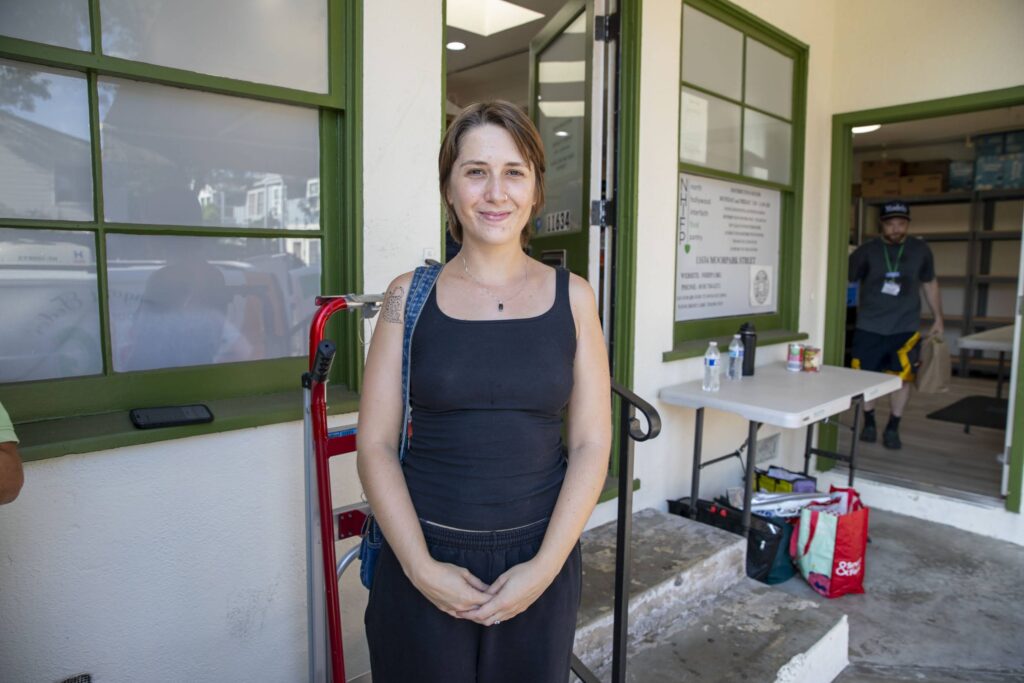
Finding Support and Dignity at North Hollywood Interfaith Food Pantry
On a Friday morning, Anna arrived at North Hollywood Interfaith Food Pantry for the first time. Learn about her experience at the Food Bank partner agency.

One Birthday, 4,000 Meals: How Keturah Reed Turned Her 42nd Into a Fundraiser for the Food Bank
Keturah Reed turned her 42nd birthday into 4,000 meals for neighbors in need. Learn how to start your own Team WeFeedLA fundraiser.
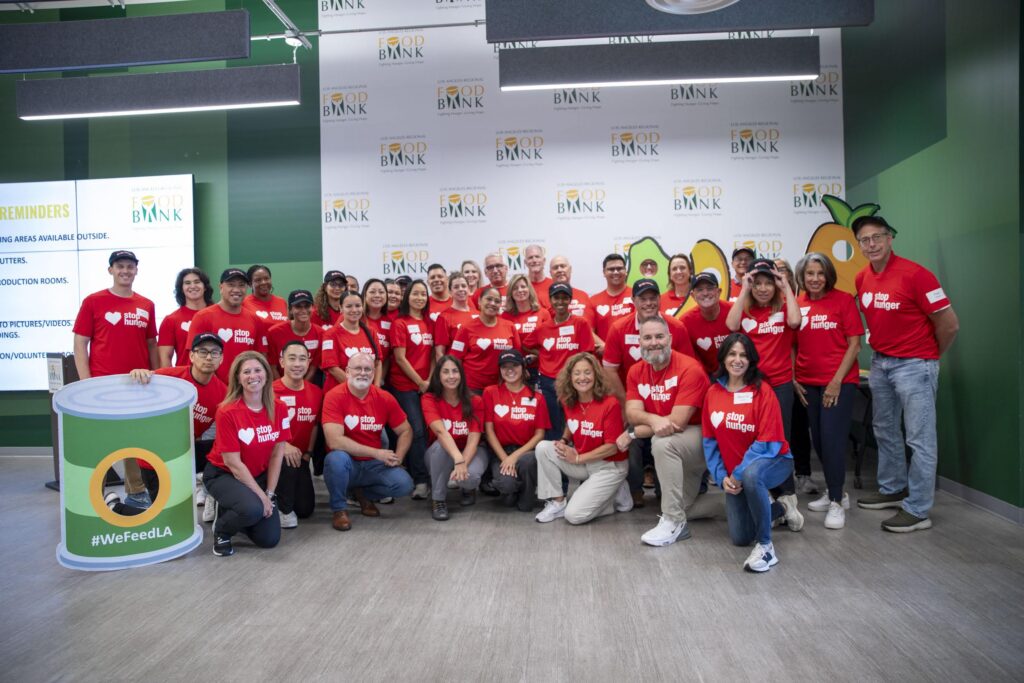
Turning Support Into Action: Inside Sodexo Stop Hunger Foundation’s Community Rebuilding Project at the Food Bank
The LA Regional Food Bank and Sodexo Stop Hunger Foundation team up to pack food for wildfire recovery during a day of service and discussion.
Extra Helpings: How the Food Bank is Helping Rescue Millions of Pounds of Food
Find out how the Food Bank’s Extra Helpings Program rescues nearly 29 million pounds of food a year to feed families across LA County.