
2025 Impact Report
Thanks to your support in 2025, the Los Angeles Regional Food Bank and our partner agencies were able to provide food to an average of
1,000,000 People
each month.
2025 Philanthropic Impact Report
Thanks to your support, in 2025, the Los Angeles Regional Food Bank provided nearly 160 million pounds of food and other products to at-risk children, seniors, adults, and families in Los Angeles County. Participants received enough nutritious food for roughly 129 million meals.
Your support for the Food Bank is critical.
Thank you for making a difference for people throughout LA County who struggle with food insecurity.
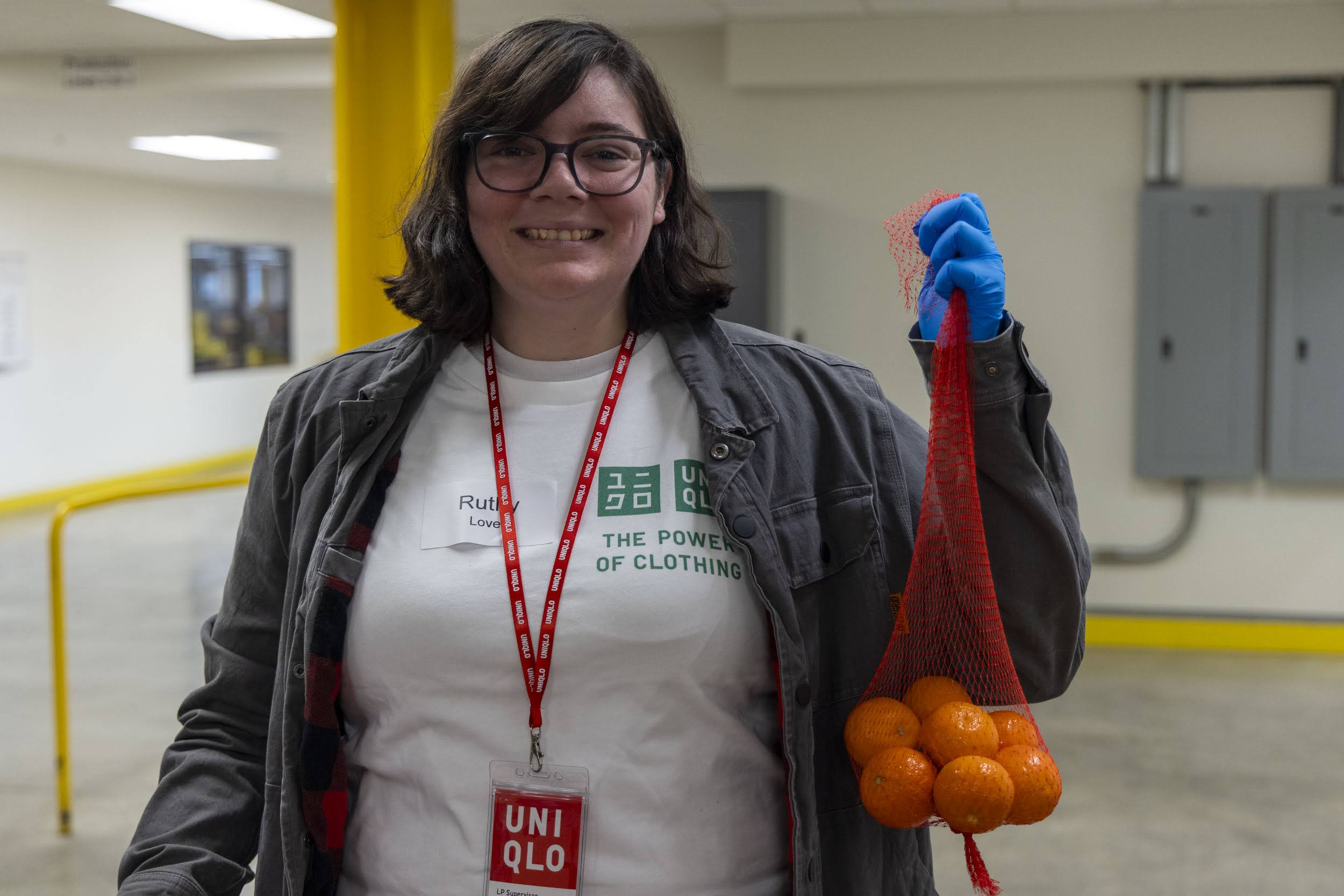
36,000
VOLUNTEERS DONATED
THEIR TIME
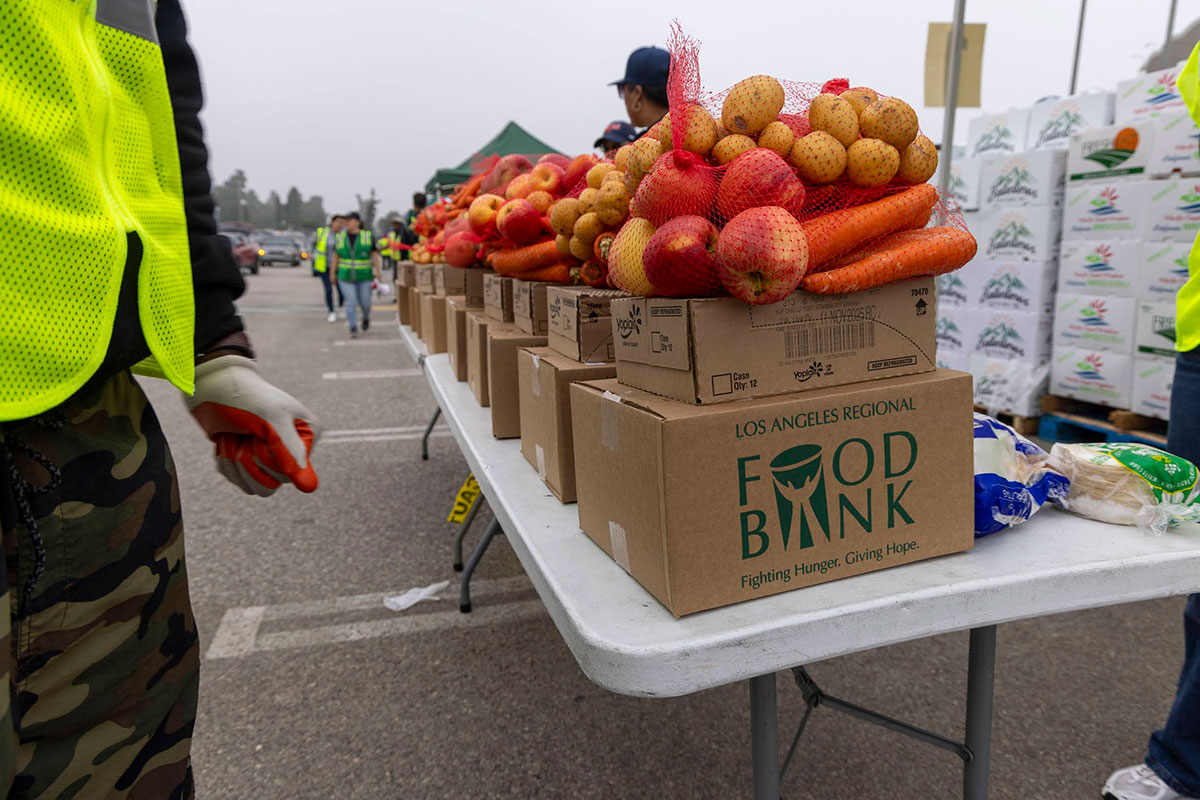
160 million
pounds of food and Product distributed
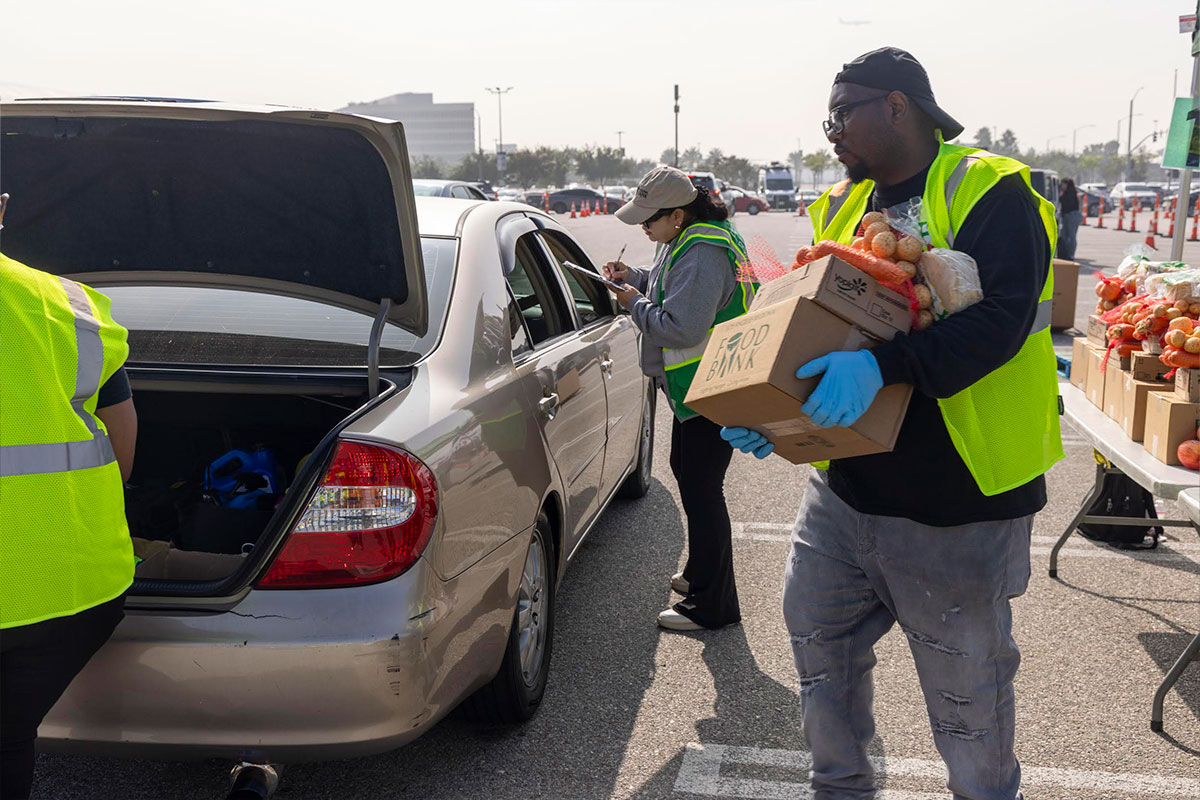
129 million
Meals provided to those in need
$1 Goes A Long Way
For each $1 donated, 96% goes directly to support programs and provide food assistance to children, seniors, individuals and families throughout Los Angeles County.
Your participation allowed the Food Bank and our partner agencies to provide nutritious food to people throughout Los Angeles County and support families struggling with food insecurity in 2025.
To see the impact of your gifts, please visit LAFoodBank.org/stories >

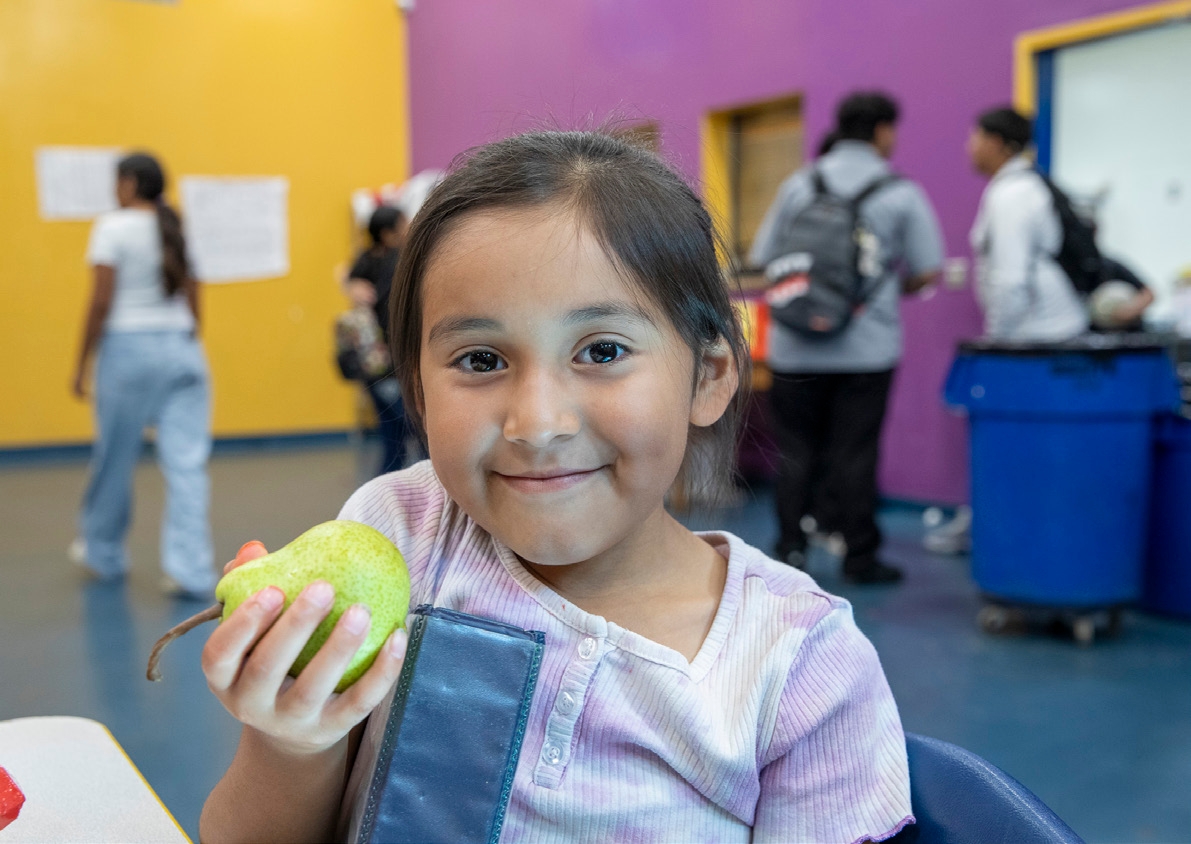
With your support, the Food Bank achieved the following outcomes in 2025:
Thanks to the CalFresh Outreach Program, 1,185 working families were able to access nutritious food through the California Department of Social Services. Our team conducted 4,127 pre-screening interviews and assisted with 1,822 CalFresh applications, helping neighbors get the support they deserve.
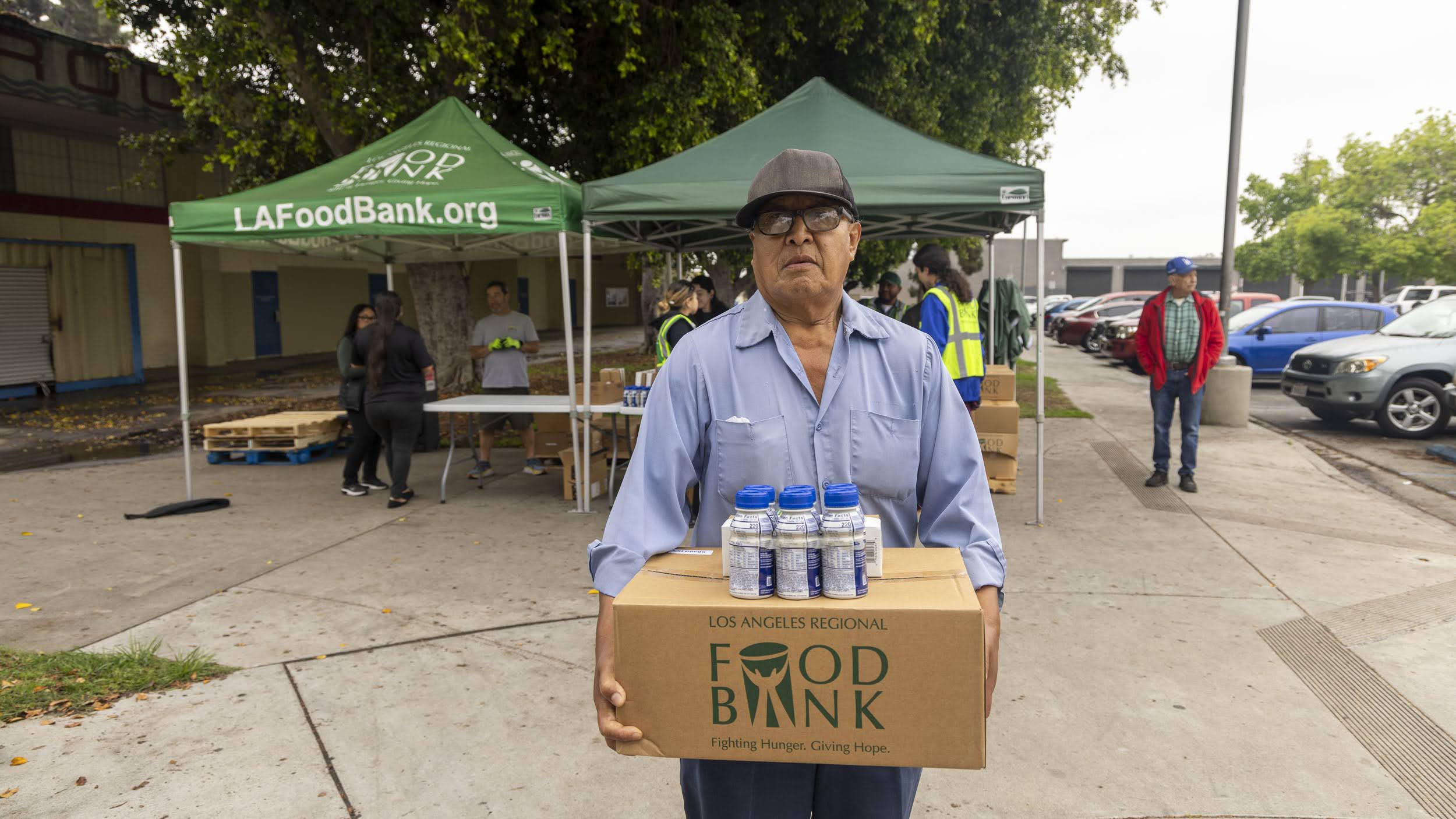
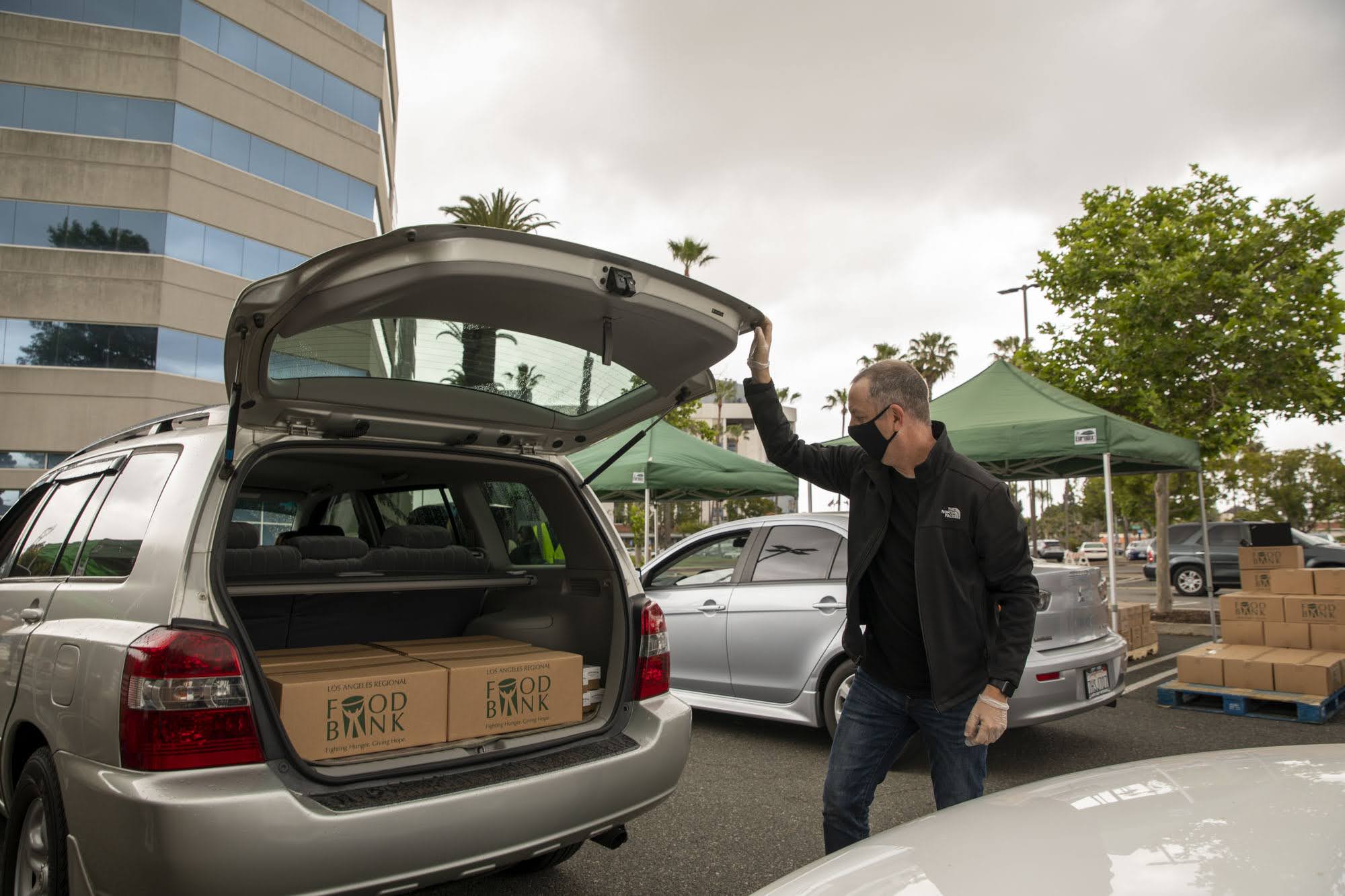
Our Mobile Food Pantry Program brought food directly to neighborhoods across Los Angeles County through both traditional and drive-through distributions. Across 29 sites, we completed 284 distributions and delivered over 5.4 million pounds of nutritious food—including more than 1.7 million pounds of fresh produce—reaching 628,575 people.
The Extra Helpings Program rescued millions of pounds of food that might have gone to waste and redirected it to neighbors facing nutrition insecurity. Partnering with 523 local donors—including grocery stores, restaurants, and bakeries—Extra Helpings connected 161 partner agencies to this vital food. Together, these agencies rescued more than 28.9 million pounds of food, providing approximately 24 million meals to individuals and families.
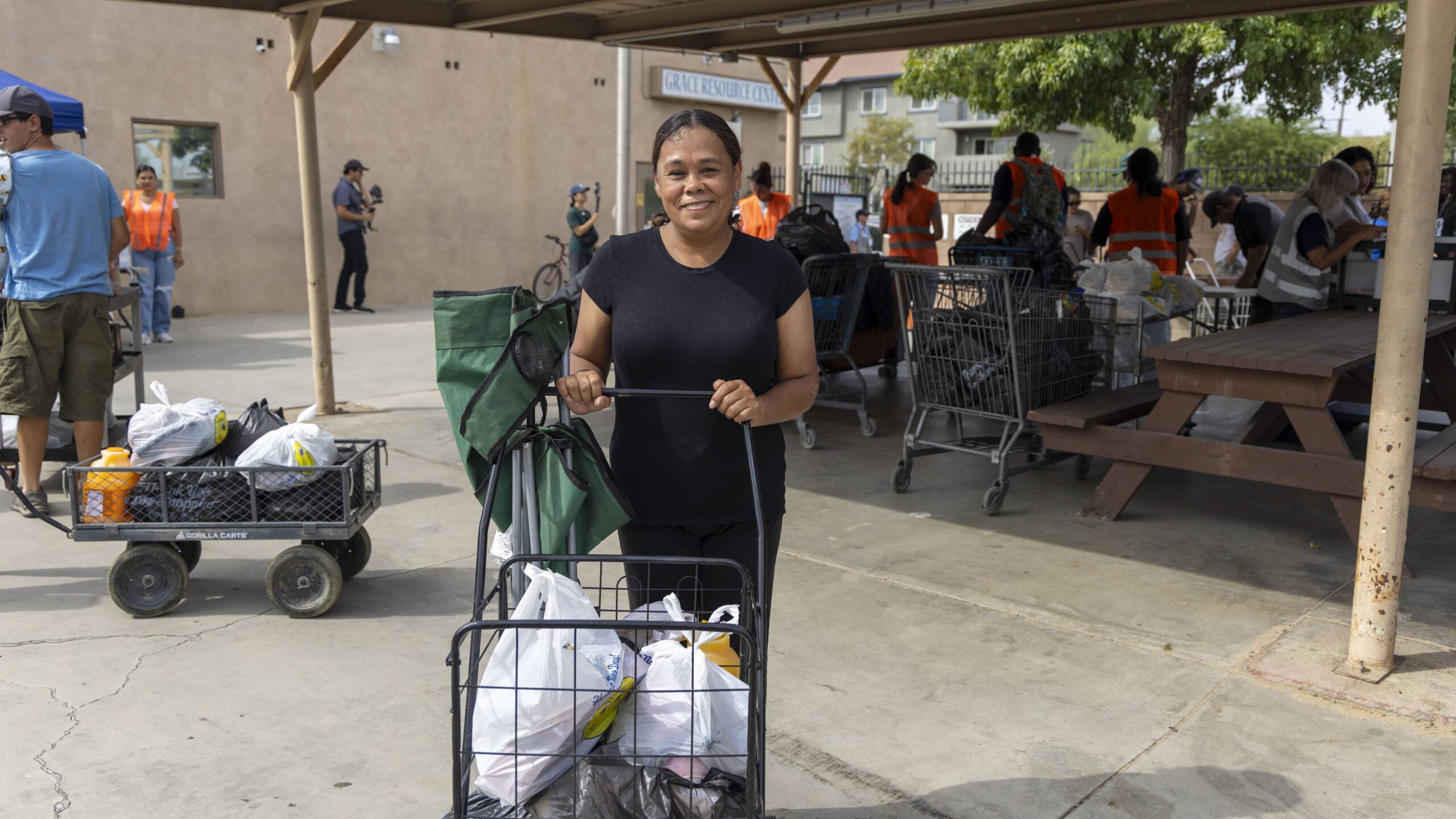
We increased access to nutritious food in underserved communities by supplying food and products to our network of more than 600 partner agencies. Our partners include food pantries, soup kitchens, senior centers, youth centers, homeless shelters, faith-based organizations, and community colleges. In addition to food, we distributed essential items, such as diapers and hygiene products, helping participants meet their basic needs. For example, 3.9 million diapers were distributed to 60,463 households through our agency network.
The Nutrition Education Program promoted healthy eating and lifestyle choices through engaging classes, activities, and outreach. The Food Bank’s Health Educators conducted live online recipe demonstrations and nutrition classes attended by 1,788 pantry participants, and distributed 4,741 educational materials.
Children's Nutrition Programs
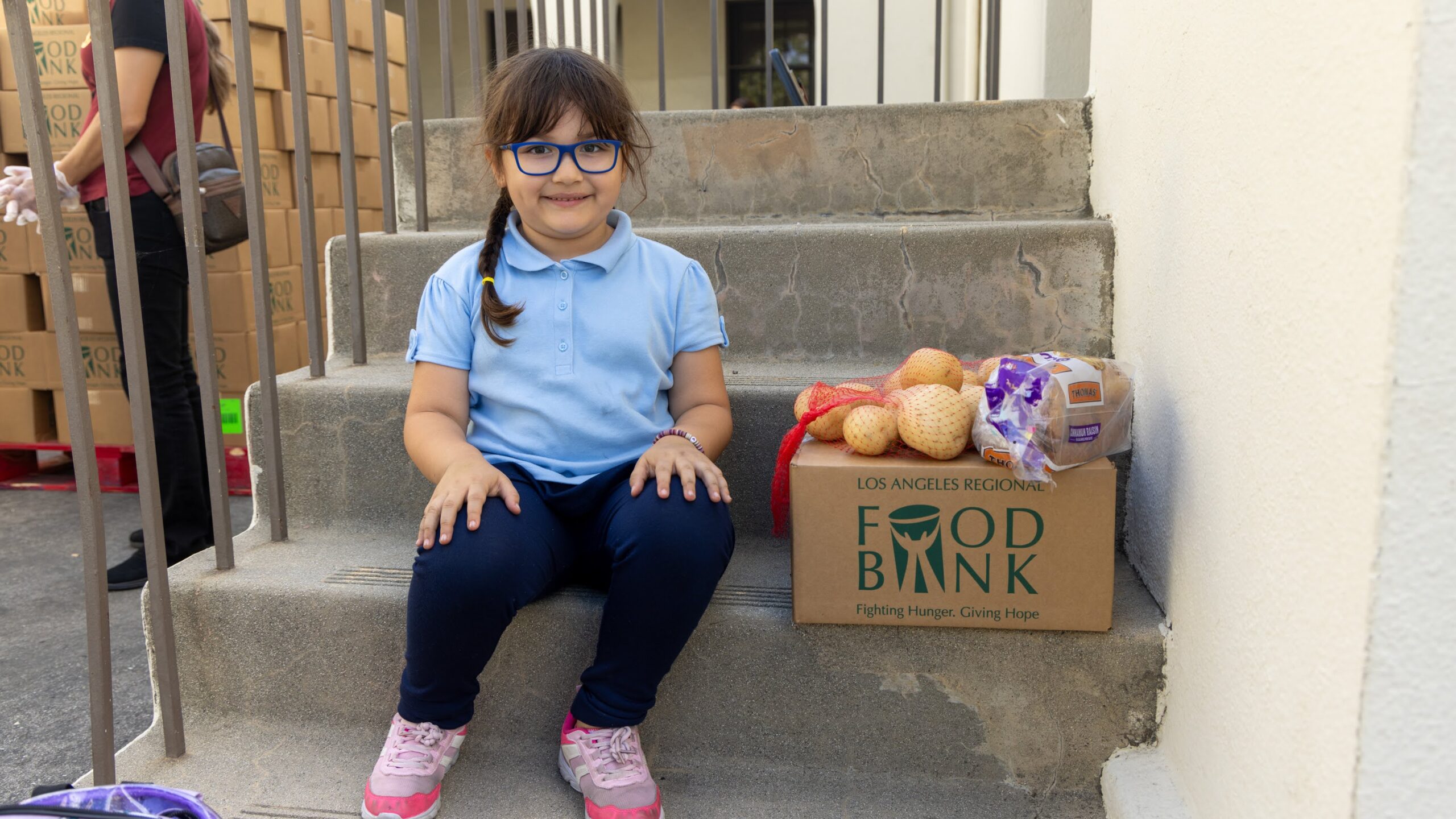
Program Snapshot:
In 2025, the Food Bank provided healthy after-school meals, Summer lunches, grocery kits, and fresh produce to over 5,000 children on a daily, weekly, or monthly basis at 58 unique sites throughout Los Angeles County, including 12 sites supporting home delivery.
Our Children’s Nutrition Programs included:
The Afterschool Meal and Summer Lunch Programs distributed 67,400 prepared meals to children in need, including healthy breakfasts, lunches, and after-school meals.
The BackPack Program provided grocery kits containing 661,444 pounds of nutritious food to at-risk children at high-need schools in the Los Angeles and Compton Unified School Districts.
Client Voices
For families still recovering from the LA wildfires, school-based food distributions provide a critical source of stability and relief. Nicole, who is helping care for her niece and godson as their family rebuilds, shared how access to groceries and other support is helping the children stay nourished, focused, and ready to learn during a long recovery.
Nicole shared, “Anything helps, especially now, with the holidays. Being able to have a little help, even with groceries. We were impacted by the fires; my brother lost his job, my sister-in-law lost hers, and we are still trying to get our lives back to where they were. This helps the kids, especially in the mornings, and getting them breakfast, so they are focused before coming into class. The kids are always hungry and very active. Every little extra bit helps.”
Senior Nutrition Programs
Program Snapshot:
In 2025, the Food Bank’s Commmodity Supplemental Food Program (CSFP) provided reliable, nutritious food to more than 318,462 low-income older adults across Los Angeles County, distributing over 9.8 million pounds of groceries.
Program Activities Included:
Delivering groceries directly to the homes of food-insecure seniors, with help from delivery partners as well as our own vehicles and drivers.
Groceries were distributed through up to 123 senior-focused partner agencies each month. Additional food was delivered directly to an average of 3,700 seniors’ homes monthly.
Client Voices
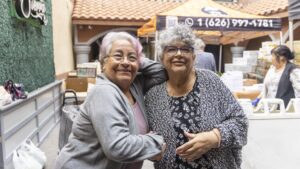
Living on a fixed income, older adults like friends Vida and Eugenia face daily trade-offs between groceries, rent, and medical expenses. Neighborhood food distributions help stretch their limited retirement dollars, easing financial strain and allowing them to remain independent and secure.
Eugenia shared, “With what we get [from our retirement], it’s not enough. The food is a great help for a person with a low income. Fruits and vegetables are expensive.”
Vida added, “It helps me by lowering food costs. That gives me a little more solvency to pay for other services. Because without this, you can’t survive. With minimum wage, you can’t survive.”
Spotlight on Nutrition
Across our programs, the Food Bank prioritizes providing nutritious food to our participants, including items like whole grains, fresh fruits and vegetables, dairy and lean proteins.
31%
Fresh Produce
In 2025, 31% of the food distributed was fresh produce.
95%
Nutritious Food
A majority of the food we distributed was rated as nutritious according to The Healthy Eating Research (HER) Nutrition Guidelines for the Charitable Food System.
47M
Pounds of PRODUCE
Over 47 million pounds of fresh produce were distributed through our direct programs and our partner agencies, providing families and individuals with access to this critical source of nutrition.